ROYAL SPOONBILL
Royal Spoonbill: Elegance in the Wetlands
The Royal Spoonbill (Platalea regia) is one of Australia’s most distinctive and graceful wading birds. Instantly recognizable by its bizarre yet highly effective bill, it is a common yet always thrilling sight in wetlands across the eastern and northern parts of the continent. They are large, statuesque birds that bring a touch of royalty to the muddy margins of our lakes and swamps.
A Regal Appearance
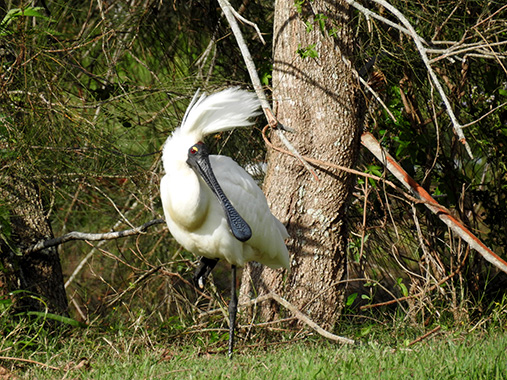
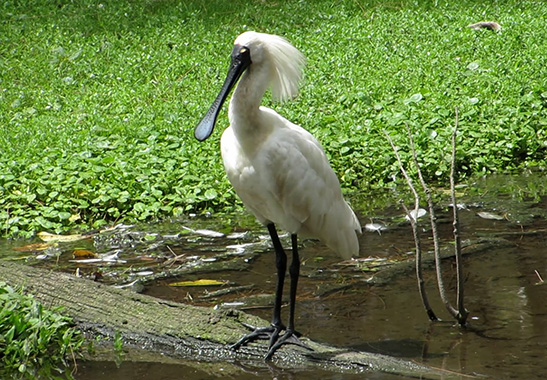
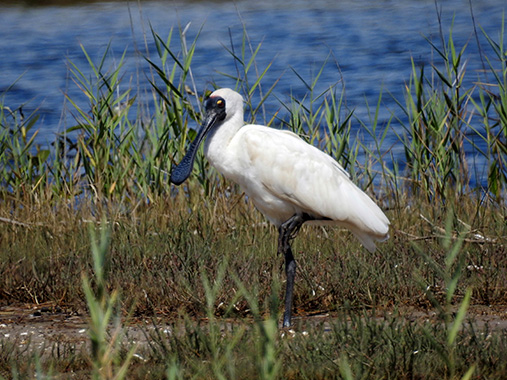
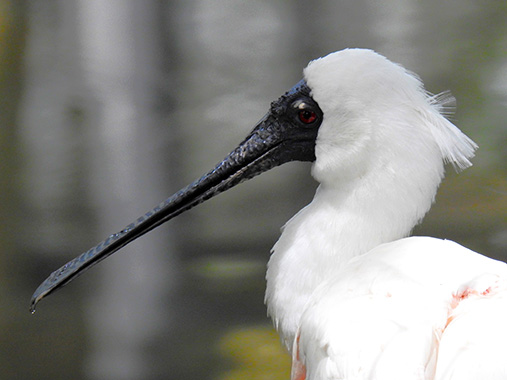
Standing about 80 centimetres tall, the Royal Spoonbill is a striking figure. Its plumage is a brilliant, pure white, which contrasts sharply with its long, spindly black legs and its most famous feature: the bill.
The bill and facial skin are jet black. The bill itself is long, flat, and broadens at the tip into a perfect “spoon” shape.
Breeding Transformation During the breeding season, these birds truly live up to their “Royal” name. They develop a magnificent, flowing crest of pure white plumes on the back of their head, which can be erected like a crown during displays. They also often develop creamy-yellow washes on their chest and a coloured patch of skin—usually red or yellow—above their eyes.
The Art of the Sweep: Eating Habits
The Royal Spoonbill’s feeding behaviour is mesmerising to watch. Unlike herons that stand still and stab at prey they can see, the Spoonbill is a tactile feeder. It doesn’t need clear water to find a meal.
Imagine standing quietly by a reed-fringed billabong. You will see the Spoonbill wading slowly forward through shallow water. It lowers its open bill and sweeps it rhythmically from side to side in wide arcs.
The interior of that spoon-shaped bill is highly sensitive to vibrations. As it sweeps through the murky water, the moment a small fish, crustacean, frog, or aquatic insect touches the inside of the bill, it snaps shut instantly. They then toss their head back to swallow the catch. This specialised method allows them to feed continuously, day or night, regardless of water clarity.
Where to Find Them
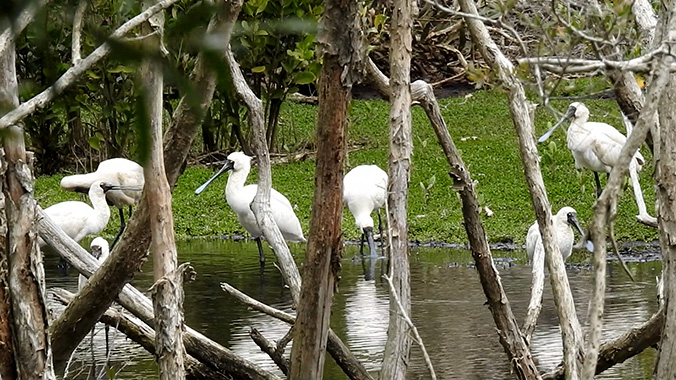
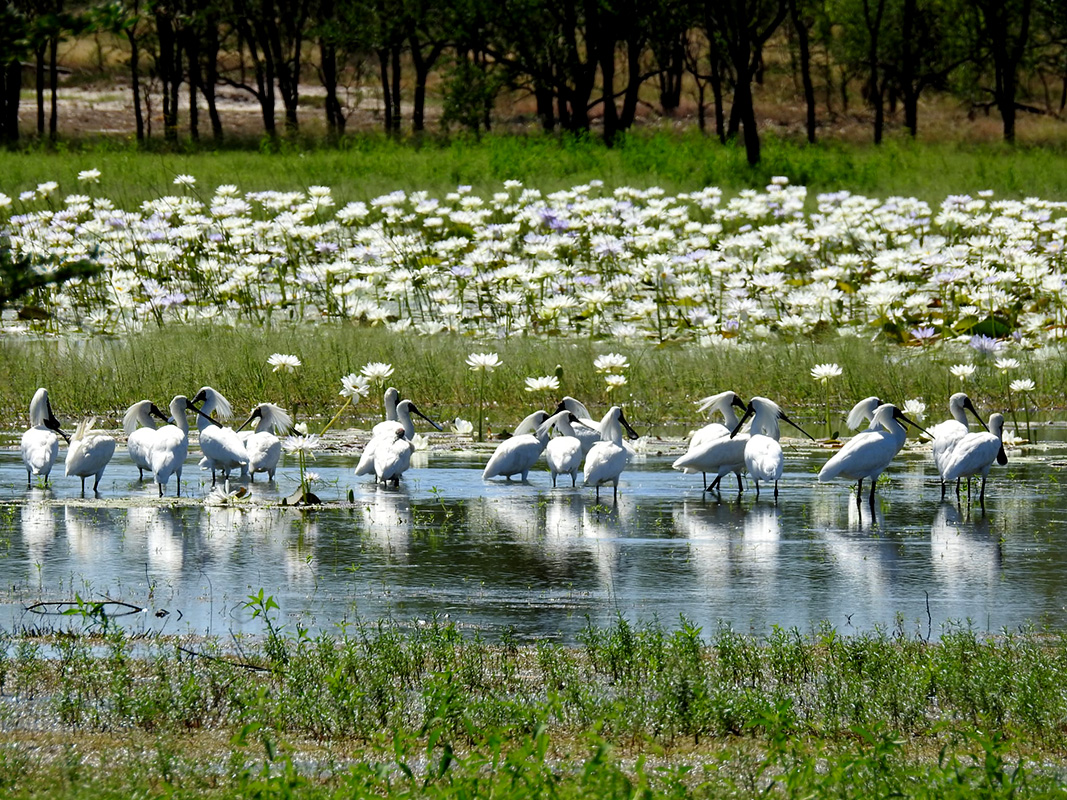
Royal Spoonbills are highly dependent on water. You will rarely find them far from it. They favour large, shallow freshwater wetlands, tidal mudflats, mangroves, artificial reservoirs, and sewage ponds.
In Australia, they are widespread across the north and east of the continent, and down through the Murray-Darling Basin. They are generally scarcer in the arid interior and the far south-west of Western Australia.
Breeding and Family Life
These birds are colonial nesters, meaning they enjoy company. They often build their nests alongside other waterbirds, such as ibises and various heron species, creating noisy, bustling rookeries.
They build substantial platform nests made of sticks and reeds, usually placed in trees standing in water, or sometimes in dense reed beds.
- The Clutch: The female typically lays two to four dull white eggs, speckled with brown.
- Shared Duties: Both parents are dedicated partners. They share the incubation duties for about 25 days and work together to feed the growing chicks by regurgitating food. The young hatch with short, straight bills; the characteristic “spoon” shape begins to develop as they mature.
Longevity
Like many large wading birds, Royal Spoonbills can live quite a long time if they survive their vulnerable chick stage. In the wild, they can live for over 15 years, with some records suggesting they can reach beyond 20 years of age.
Did You Know?
- Flying Posture: When in flight, Royal Spoonbills fly with their necks extended straight out in front of them and their legs trailing behind. This is different from herons and egrets, which tuck their necks into an ‘S’ shape when flying.
- A Global Family: While our Royal Spoonbill is native to Australia, New Zealand, and parts of Southeast Asia, there are five other species of spoonbills found around the world, including the rose-pink Roseate Spoonbill of the Americas.
- Wetland Indicators: Because they rely so heavily on aquatic prey, healthy populations of Royal Spoonbills are excellent indicators of the overall health of a wetland ecosystem.
Photo Gallery