SCALY-BREASTED LORIKEET
Scaly-breasted Lorikeet
A Flash of Green in the Blossoms
In flowering forests and coastal woodlands of eastern Australia, a lively chatter often gives away the presence of a small, energetic parrot. Suddenly a group of bright green birds bursts from a flowering tree, darting and swirling before settling again among the blossoms. These are Scaly-breasted Lorikeets, one of Australia’s most distinctive nectar-feeding parrots.
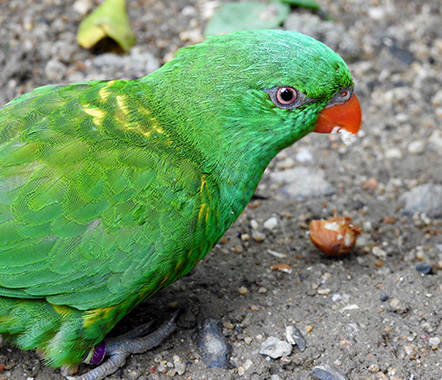
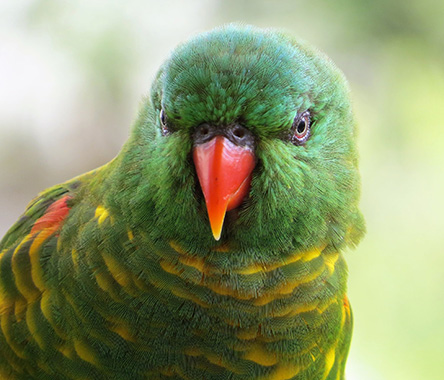
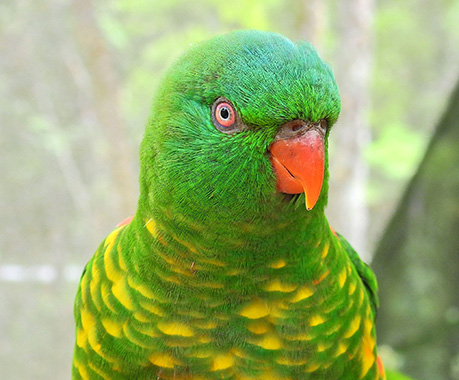
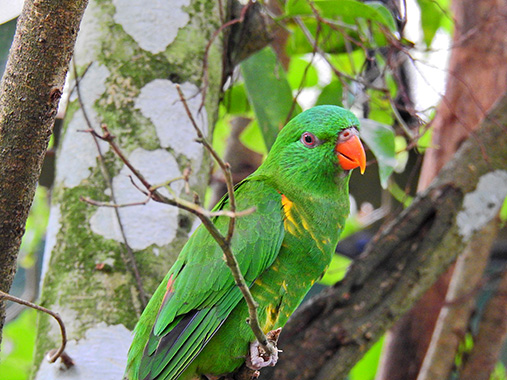
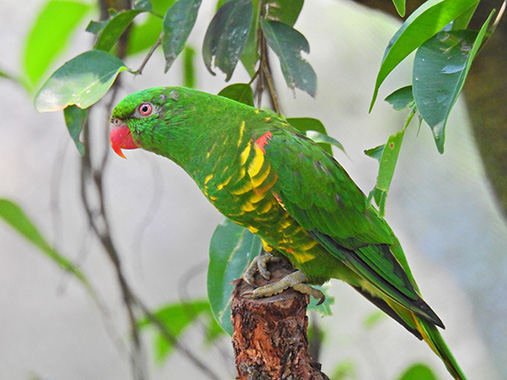
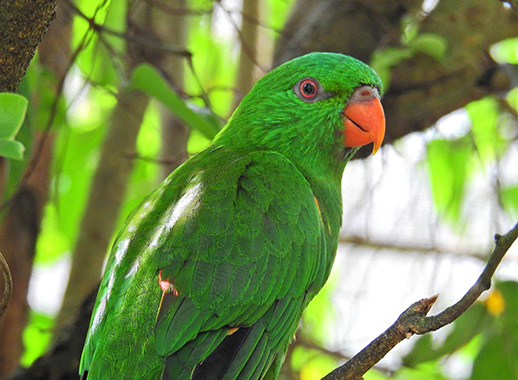
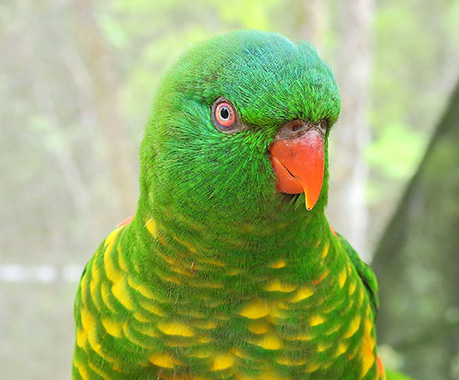
Unlike their famous cousin, the Rainbow Lorikeet, this species carries a more subtle beauty. Its plumage glows emerald green, but a closer look reveals the intricate pattern that gives the bird its name. Each feather on the chest is edged in yellow, creating a delicate “scaly” pattern across the breast and belly. This fine detail becomes visible when sunlight catches the bird as it feeds among flowering gums.
Highly social and constantly vocal, Scaly-breasted Lorikeets are usually seen in small flocks or large feeding groups wherever trees are in bloom.
Appearance
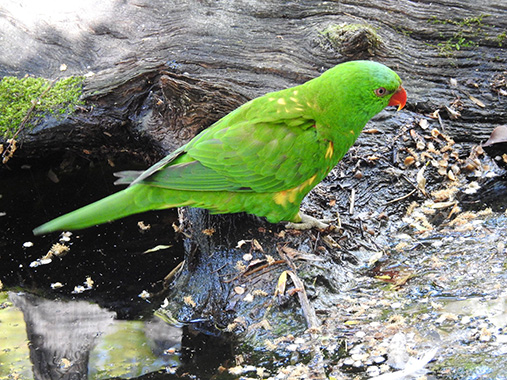
The Scaly-breasted Lorikeet is a medium-sized lorikeet, measuring about 23–25 cm in length.
Key features include:
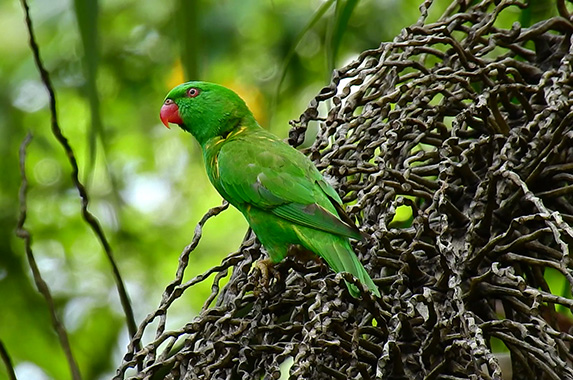
- Bright green body overall
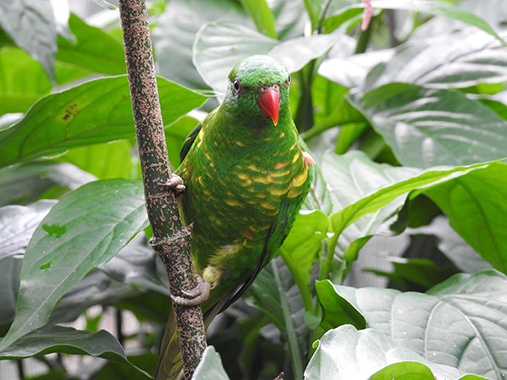
- Yellow-edged feathers across the breast and belly, creating a scaly appearance
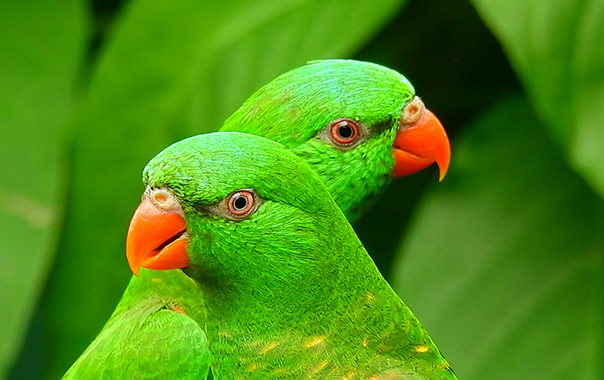
- Red-orange beak
- Blue-green wash on the head
- Yellow underwing patches visible during flight
- Short, rounded tail
Both males and females look alike, which is common in many lorikeet species.
Like all lorikeets, they possess a specialised brush-tipped tongue. This remarkable adaptation allows them to sweep nectar and pollen from flowers with surprising efficiency.
Voice and Behaviour
Scaly-breasted Lorikeets are rarely quiet. Their calls are high-pitched, sharp and rapid, often described as a series of “screeching chattering notes”.
When feeding, flocks produce a constant background of:
- sharp screeches
- rapid chatter
- excited squeals during flight
Their calls can carry long distances across forest and urban parks, especially when a flock lifts suddenly from a flowering tree.
These birds are highly nomadic, moving across the landscape in response to flowering events. When eucalyptus, melaleuca or banksia trees bloom, lorikeets may arrive in large numbers and remain until the nectar supply fades.
Habitat and Distribution
The Scaly-breasted Lorikeet occurs along eastern Australia, including:
- Cape York Peninsula in Queensland
- coastal and inland forests of Queensland
- New South Wales
- occasionally reaching eastern Victoria
They inhabit a variety of environments where flowering trees are abundant, including:
- open forests and woodlands
- coastal heath
- mangroves
- farmland with scattered trees
- suburban parks and gardens
Urban areas with flowering native trees can support surprisingly large flocks.
Diet
These birds are specialist nectar feeders, relying heavily on flowering trees.
Their diet includes:
- nectar from eucalyptus blossoms
- pollen
- native fruits
- berries
- occasional seeds
While feeding, their faces often become dusted with pollen, making them important pollinators of Australian native plants.
Breeding and Nesting
The breeding season generally occurs between August and January, though it can vary depending on food availability.
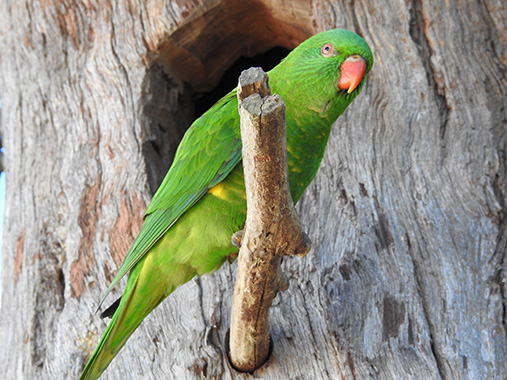
Scaly-breasted Lorikeets nest in tree hollows, often high in large eucalyptus trees.
Typical breeding details:
- Clutch size: usually 2 eggs
- Incubation period: about 25 days
- Fledging time: around 7–8 weeks after hatching
Both parents share responsibilities, incubating the eggs and feeding the chicks with regurgitated nectar-rich food.
Suitable tree hollows are essential for breeding, and these may take over a century to form naturally in large trees.
Lifespan
In the wild, Scaly-breasted Lorikeets are believed to live around 10–15 years, although exact figures are difficult to measure.
In protected conditions such as wildlife care or captivity, lorikeets may live 15–20 years or more.
Interesting Facts
- Specialised tongues: Their brush-like tongue tips act like a tiny paintbrush for collecting nectar.
- Pollen carriers: As they move between flowers, they transfer pollen and help many Australian plants reproduce.
- Nomadic travellers: Rather than defending fixed territories, they follow seasonal flowering events across large distances.
- Hidden beauty: From a distance they appear plain green, but close inspection reveals the delicate yellow scalloping across the chest.
- Mixed flocks: They sometimes feed alongside Rainbow Lorikeets and other nectar-feeding birds.
Conservation Status
- IUCN Red List: Least Concern
- Populations are currently considered stable across much of their range.
Although not globally threatened, local pressures can still affect populations.
Threats
Several environmental pressures can impact Scaly-breasted Lorikeets:
- Loss of mature trees that provide nesting hollows
- Land clearing for agriculture and development
- Urban expansion reducing natural woodland habitat
- Competition for nesting hollows with other birds and invasive species
- Pesticide use, which can affect nectar resources and food availability
Because they depend heavily on flowering trees and natural hollows, long-term habitat protection is essential.
How We Can Help
Protecting Scaly-breasted Lorikeets benefits many other native species as well.
Practical ways to help include:
- Plant native flowering trees such as eucalyptus, grevillea, banksia and bottlebrush.
- Protect old trees that contain natural nesting hollows.
- Install wildlife nest boxes where natural hollows are scarce.
- Avoid pesticides that contaminate nectar and harm insects.
- Support habitat conservation and restoration projects.
Even suburban gardens planted with nectar-rich native species can provide important feeding stations for these birds.
A Living Part of Australia’s Flowering Forests
The Scaly-breasted Lorikeet is more than just a colourful parrot. It is part of the delicate ecological web that links Australia’s flowering trees, forests, and wildlife. Each time a lorikeet dips its brush-tipped tongue into a blossom, it helps carry pollen from flower to flower, sustaining the forests that sustain countless other species.
Watching a flock descend onto a flowering gum tree is a reminder that the health of these landscapes depends on protecting the trees, habitats and natural rhythms that these birds have followed for thousands of years.
References
- BirdLife Australia – https://birdlife.org.au
- IUCN Red List: Trichoglossus chlorolepidotus – https://www.iucnredlist.org
- Australian Museum – https://australian.museum
- Cornell Lab of Ornithology (Birds of the World) – https://birdsoftheworld.org
- eBird Species Guide – https://ebird.org/species/scblor1
- Australian Government Species Profile – https://species-profile-and-threats-database.environment.gov.au :::
Feeding native birds?
Photo Gallery