Scorpions in Australia
Australian Scorpions: Silent Guardians of the Night
As the heat of the day fades and the Australian landscape cools, another world awakens beneath rocks, bark and sand. Moving quietly and with ancient precision, Australian scorpions emerge—often unseen, frequently misunderstood, yet vital to the balance of our ecosystems. These nocturnal arachnids have lived on Earth for hundreds of millions of years, perfectly adapted to survive Australia’s harsh and varied environments.
What Is a Scorpion?
Scorpions are arachnids, meaning they are related to spiders, mites and ticks—not insects.
Key Characteristics
- Class: Arachnida
- Order:
Scorpiones - Body segments: Two (cephalothorax and abdomen)
- Legs: 8
- Distinct features:
- A pair of pincers (pedipalps)
- A curved tail ending in a venomous stinger
Scorpions rely on touch and vibration, rather than sight, to understand their surroundings.
Scorpions of Australia
Australia is home to over 100 known scorpion species, with many more likely still undescribed. While Australia does not have scorpions considered lethal to humans, several species can deliver painful stings.
Where They Live
Scorpions are found across all mainland states and territories, from deserts to rainforests.
Common habitats include:
- Arid deserts and sand dunes
- Open woodlands and grasslands
- Rainforests and coastal heath
- Under rocks, logs and leaf litter
- Inside burrows and tree bark
Scorpions are excellent survivors, able to tolerate extreme heat, drought and long periods without food.
Major Scorpion Groups in Australia
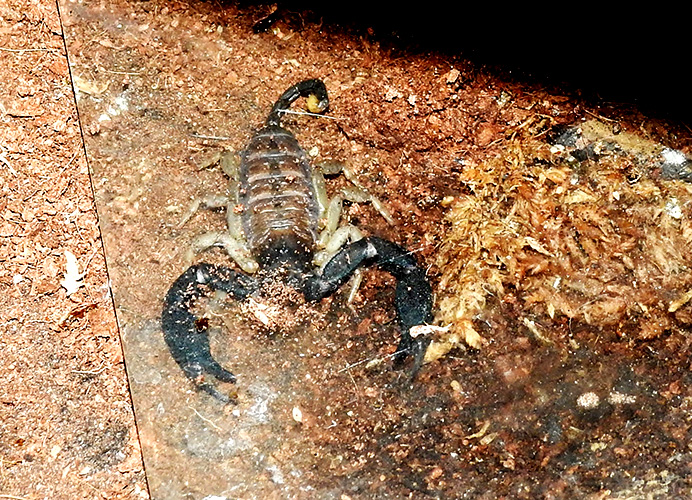
1. Burrowing Scorpions (Urodacus genus)
These are the largest and most recognisable Australian scorpions.
- Length: Up to 12 cm
- Thick bodies and powerful pincers
- Live in deep burrows, sometimes over 1 metre long
- Common in arid and semi-arid regions
Example: Urodacus yaschenkoi (Desert Scorpion)
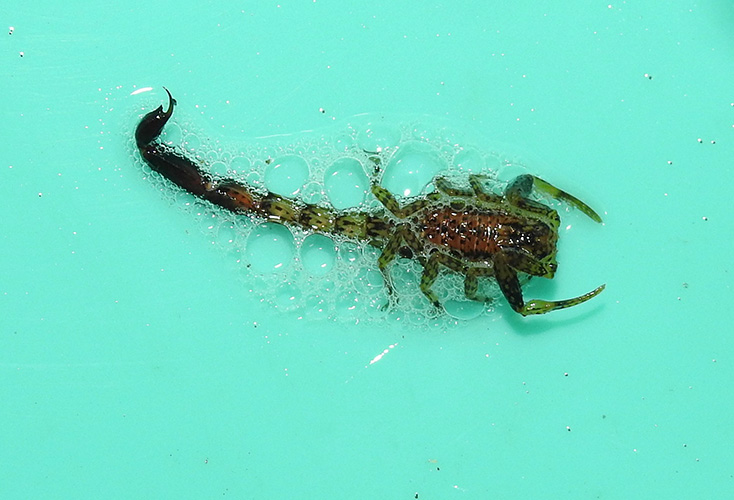
2. Bark Scorpions (Lychas genus)
Smaller, agile and more likely to encounter humans.
- Length: 3–6 cm
- Found under bark, rocks and garden debris
- More common in eastern and northern Australia
- Responsible for most scorpion stings in Australia
3. Rainforest & Tropical Scorpions
- Found in Queensland and northern regions
- Often darker in colour
- Prefer moist, shaded environments.
Behaviour and Lifestyle
Nocturnal Hunters
Scorpions are active at night, avoiding heat and dehydration during the day.
Feeding Habits
They are ambush predators, feeding on:
- Insects
- Spiders
- Small lizards
- Other scorpions
Scorpions use their pincers to grab prey, delivering venom only when needed.
Venom and Stings
Australian scorpion venom is used mainly for subduing prey, not defence.
What a Sting Feels Like
- Sharp, localised pain
- Redness or swelling
- Tingling or numbness
Serious reactions are rare, though children and allergic individuals may be more sensitive.
No Australian scorpion species is known to cause human deaths.
Sensory Superpowers
Scorpions have remarkable adaptations:
- Vibration detection: Tiny hairs sense movement through ground and air
- Low metabolism: Can survive months without food
- UV fluorescence: Scorpions glow blue-green under ultraviolet light
Why Do Scorpions Glow?
Scientists believe this may:
- Help detect UV light levels
- Aid in night-time navigation
- Be a by-product of their exoskeleton chemistry
Life Cycle and Reproduction
Scorpions display unusual parental care.
- Live birth
- Females give birth to live young, not eggs
- Mother–young bond
- Newborns climb onto the mother’s back
- They remain there until their first moult
- Slow growth
- Scorpions may take several years to reach adulthood
- Long lifespan
- Some species live 10–25 years
Role in the Ecosystem
Scorpions are important natural pest controllers.
They help regulate populations of:
- Insects
- Spiders
- Small arthropods
In turn, scorpions are prey for:
- Birds
- Reptiles
- Small mammals
Conservation & Coexistence
Although scorpions are not endangered as a group, many species face local pressures.
Threats
- Habitat destruction
- Urban expansion
- Pesticide use
- Soil compaction and land clearing
Living Safely with Scorpions
Respect Their Role
Scorpions are not aggressive and sting only when threatened.
- Avoid handling scorpions
- Check shoes, gloves and bedding in bush areas
Protect Natural Habitats
- Preserve leaf litter, rocks and fallen timber
- Support conservation of arid and woodland environments
Reduce Chemical Use
- Limit insecticides that remove scorpion prey
- Choose wildlife-friendly pest management
Learn and Share Knowledge
- Teach children that scorpions are part of healthy ecosystems
- Encourage curiosity rather than fear
Fascinating Scorpion Facts
- Scorpions have existed for over 430 million years, predating dinosaurs.
- They can slow their metabolism to survive extreme conditions.
- Some Australian scorpions build burrows deeper than a human is tall.
- A scorpion’s sting is often less dangerous than a bee sting.
- Under UV light, scorpions glow like living constellations.
Ancient Survivors of the Australian Night
Scorpions are living relics—quiet, patient and perfectly suited to the landscapes they inhabit. By understanding them, we replace fear with respect and recognise their role in keeping Australia’s ecosystems in balance.
Photo Gallery