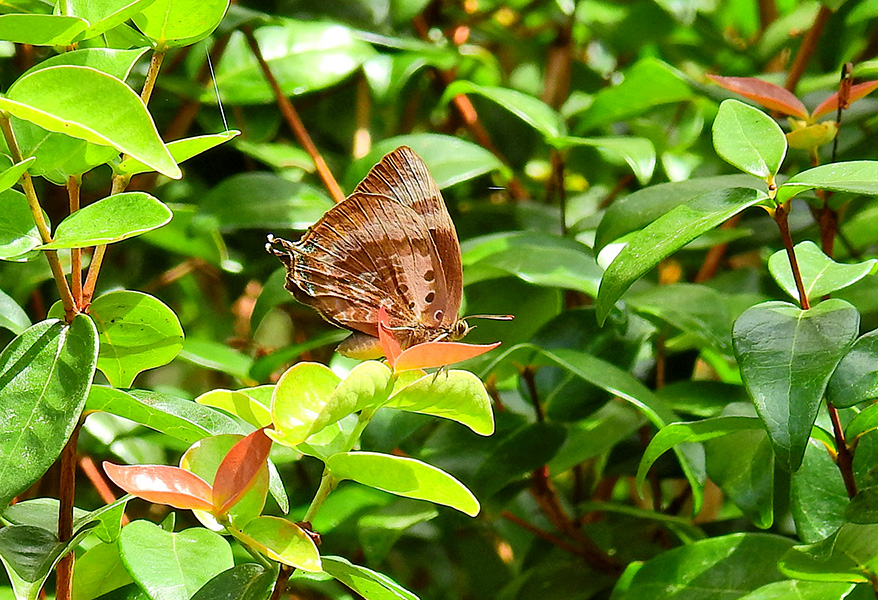
Shining Oak-blue Butterfly
Arhophala micale
Shining Oak-blue Butterfly
The Shining Oak-blue (Arhopala micale) is a small but beautiful butterfly found in the tropical and subtropical forests of northern and eastern Australia. A member of the Lycaenidae family—the group known as the blues, coppers, and hairstreaks—this butterfly is admired for the soft iridescent blue sheen on its wings and its delicate patterns underneath.
Although it is not one of the most commonly seen butterflies, the Shining Oak-blue can be encountered in forest habitats where its host plants grow. Its small size and swift flight make it easy to overlook, but when sunlight catches its wings, it reveals a striking flash of colour.
What Does the Shining Oak-blue Look Like?
The Shining Oak-blue is a small butterfly with a wingspan of about 30–40 millimetres.
Its appearance includes several distinctive features:
- Upper wings (male): shimmering violet‑blue with narrow dark borders.
- Upper wings (female): brown with patches of blue near the body.
- Underside: pale grey with fine dark lines and spots forming delicate patterns.
- Tail: short tail‑like extensions on the hindwings typical of many Lycaenid butterflies.
- Body: slender and lightly coloured.
The iridescent blue colouring of the male wings often becomes visible only when the butterfly moves in sunlight.
Habitat and Distribution
The Shining Oak-blue occurs in northern and eastern Australia, particularly in:
- northern Queensland
- parts of the Northern Territory
- coastal and subtropical forests of eastern Australia
It also occurs across parts of Southeast Asia and nearby regions.
Typical habitats include:
- tropical rainforest
- forest edges and clearings
- woodland with native shrubs
- gardens near bushland
The species is most often seen near vegetation where host plants grow.
Feeding Habits
Adult Shining Oak-blue butterflies feed mainly on nectar from small flowers.
They may also obtain nutrients from:
- damp soil
- plant sap
- rotting fruit
Their feeding activity usually occurs close to vegetation, and they often rest on leaves between flights.
Breeding and Host Plants
The caterpillars of the Shining Oak-blue feed on various plants, particularly those belonging to the Fabaceae (legume) family.
Host Plants
These may include:
- native legumes
- shrubs and small trees growing in forest habitats
Life Cycle
- Egg: laid on host plant leaves or flower buds.
- Caterpillar: small, flattened, and green to match surrounding foliage.
- Pupa: formed on vegetation or near the host plant.
- Adult butterfly: emerges to feed and reproduce.
Like many Lycaenidae butterflies, the caterpillars may interact with ants, which sometimes protect them from predators in exchange for sugary secretions.
Longevity
The complete life cycle from egg to adult typically takes around four to five weeks, depending on temperature and food availability.
Adult butterflies usually live one to two weeks, focusing on feeding and reproduction during that time.
Indigenous Connections
Butterflies are part of the complex seasonal rhythms observed by First Nations peoples across Australia. Their presence often reflects the flowering of plants and the health of forest environments.
In traditional ecological knowledge, insects such as butterflies help signal changes in the landscape and seasonal conditions. Because Australia contains many Indigenous language groups, traditional names for butterflies vary across regions and are not always widely documented in public sources.
Conservation Status and Threats
The Shining Oak-blue is generally considered not threatened, but it relies on healthy vegetation and host plants.
Potential threats include:
- habitat clearing
- pesticide use
- loss of native host plants
- fragmentation of forest habitats
Maintaining native vegetation helps support this species and many other forest butterflies.
Why the Shining Oak-blue Matters
The Shining Oak-blue is a small but captivating butterfly that adds subtle beauty to Australia’s forests. Its shimmering blue wings and delicate patterns remind us of the incredible diversity of butterflies that inhabit the country’s natural landscapes.
Protecting forest habitats ensures that this elegant butterfly continues to thrive in Australia’s ecosystems.
Scientific References
Braby, M. F. Butterflies of Australia: Their Identification, Biology and Distribution
Atlas of Living Australia – Arhopala micale records
Australian Butterfly Conservation resources
CSIRO – Australian insect biodiversity
Wikipedia – Arhopala micale (Shining Oakblue Butterfly)
Photo Gallery