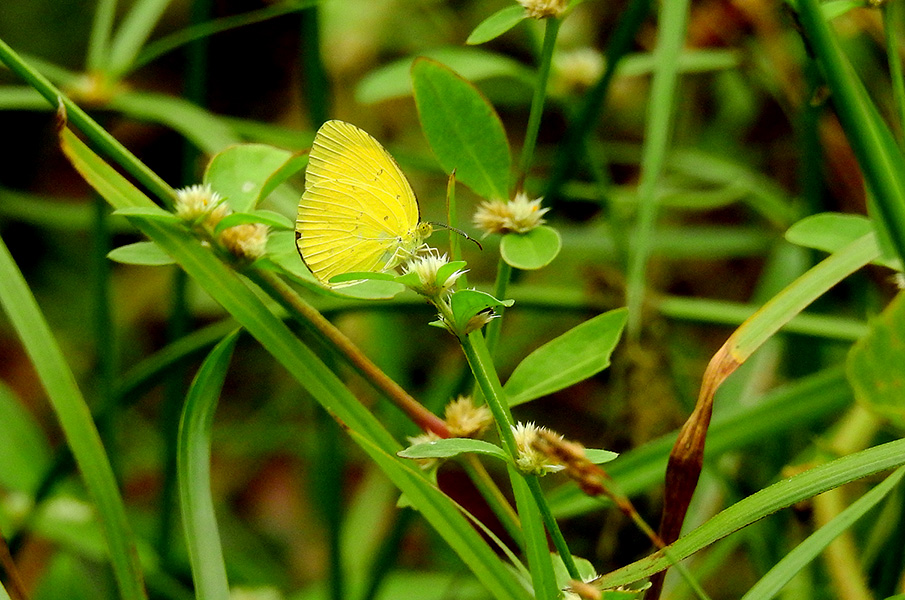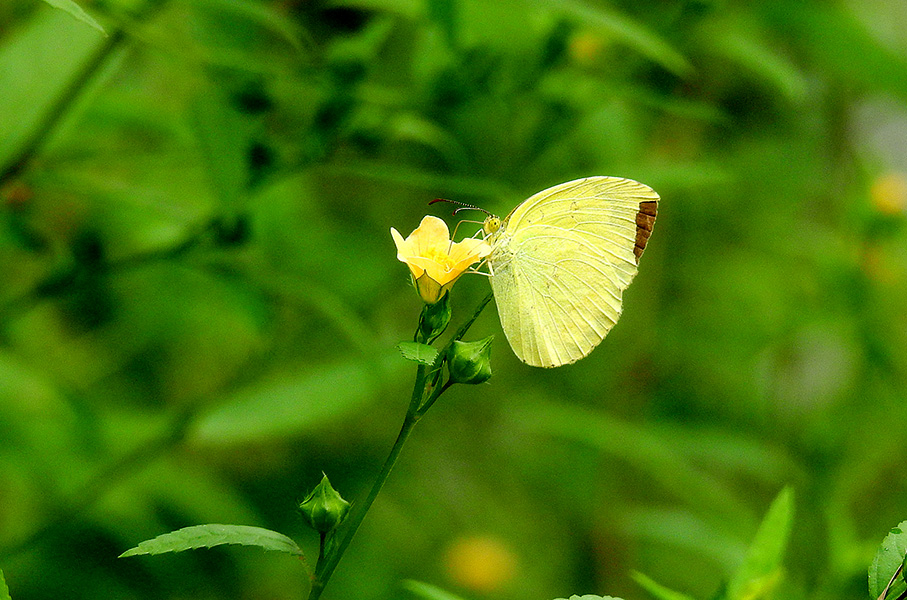
Small Grass Yellow Butterfly
Small Grass Yellow Butterfly
The Small Grass‑Yellow (Eurema smilax) is one of Australia’s most delicate and cheerful butterflies. With its bright yellow wings and quick, fluttering flight, it is often seen drifting through gardens, grasslands, open woodland, and roadsides where sunny patches of native vegetation grow.
This butterfly belongs to the Pieridae family, the group that includes many of Australia’s white and yellow butterflies. Although it is small, the Small Grass‑Yellow is a lively and adaptable species that brings a flash of light to many warm landscapes.
What Does the Small Grass‑Yellow Look Like?
The Small Grass‑Yellow is a tiny to medium-sized butterfly with a wingspan of about 25–35 millimetres.
Its appearance is simple but attractive:
- Upper wings: bright yellow, sometimes with a faint orange or greenish tint
- Wing tips: often marked with a small dark patch
- Underside: paler yellow to creamy white, helping it blend with light vegetation
- Body: slender and lightly coloured
- Flight style: rapid, fluttering, and low to the ground
Males are generally brighter yellow, while females may appear slightly paler and more variable in colour.
Habitat and Distribution
The Small Grass‑Yellow is found across much of northern and eastern Australia, especially in warm regions where grasses and legumes grow well.
It can be seen in:
- grasslands
- open woodland
- roadsides
- gardens and parks
- farmland edges
- coastal and inland sunny clearings
The species is also found in Southeast Asia and nearby regions, but in Australia it is a familiar butterfly of warm, open habitats.
Feeding Habits
Adult Small Grass‑Yellow butterflies feed mainly on flower nectar.
They often visit:
- small native flowers
- herbs and wildflowers
- garden blossoms
- flowering weeds after rain
Their quick, energetic flight makes them appear to flicker through the air like moving sunlight.
Breeding and Host Plants
The Small Grass‑Yellow lays its eggs on plants in the legume family (Fabaceae).
Host plants
Caterpillars feed on a variety of native and introduced legumes, including:
- Cassia species
- Senna species
- other grassland and woodland legumes
Life cycle
- Egg – laid singly on the leaves of host plants
- Caterpillar – green and slender, designed to blend with foliage
- Pupa – attached to vegetation in a small chrysalis
- Adult butterfly – emerges to feed and reproduce
The caterpillars are usually very well camouflaged and may be difficult to spot among the leaves of their host plants.
Longevity
The full life cycle from egg to adult usually takes around four to five weeks, depending on temperature and food supply.
Adult butterflies generally live two to four weeks, and several generations may occur during favourable weather conditions.
Interesting Facts About the Small Grass‑Yellow
- It is one of the smaller yellow butterflies seen in Australia.
- Its fast, low flight often keeps it close to grasses and small flowering plants.
- It is most active in warm, sunny weather.
- It can appear in large numbers after rain when host plants and flowers become abundant.
There is something especially lively about a Small Grass‑Yellow fluttering across a meadow — a tiny burst of brightness over the green.
Indigenous Connections
Butterflies have long been part of the seasonal rhythms observed by First Nations peoples across Australia. Their appearance often follows rainfall, fresh plant growth, and flowering in grassland and woodland environments.
In traditional ecological knowledge, butterflies are part of the wider web of life that links plants, insects, animals, and seasonal change. Because Australia has many Indigenous language groups, traditional names for butterflies vary between regions and are not always widely recorded in public sources.
Recognising butterflies like the Small Grass‑Yellow as part of these seasonal cycles acknowledges the deep understanding and stewardship of Country held by Traditional Owners.
Conservation Status and Threats
The Small Grass‑Yellow is currently considered common and not threatened across much of its range.
However, local populations may still be affected by:
- habitat loss
- pesticide use
- removal of native grasses and legumes
- drought and climate variation
Planting native host plants and reducing chemical use can help support healthy local populations.
What Can We Do to Help the Species?
You can help Small Grass‑Yellow butterflies by:
Planting native legumes
These provide important food plants for caterpillars.Growing nectar-rich flowers
Adults need flowering plants for energy.Reducing pesticide use
This protects both caterpillars and adult butterflies.Allowing some natural ground growth
Wild edges and native grasses are valuable butterfly habitat.
Why the Small Grass‑Yellow Matters
The Small Grass‑Yellow may be tiny, but it is a lively and important part of Australia’s butterfly diversity. Its sunny colour, rapid movement, and connection to native grasses and legumes make it a lovely species to observe in the wild.
By protecting native vegetation and keeping gardens butterfly-friendly, we help ensure that these bright little wanderers continue to move through Australia’s landscapes.
Scientific References
- Braby, M. F. Butterflies of Australia: Their Identification, Biology and Distribution
- Atlas of Living Australia – Eurema smilax records
- Australian Butterfly Conservation resources
- Australian Museum – Butterfly species profiles
- Wikipedia – Eurema smilax (Small Grass‑Yellow)
Photo Gallery