Small Green‑banded Blue Butterfly
Psychonotis caelius
Small Green‑banded Blue
The Small Green‑banded Blue (Psychonotis caelius) is a tiny but beautifully patterned butterfly found in the tropical north of Australia. With its shimmering blue upper wings and delicate green bands on the underside, this species is a member of the Lycaenidae family, the group of butterflies commonly known as the blues, coppers, and hairstreaks.
Although small and easily overlooked, the Small Green‑banded Blue is a fascinating butterfly that inhabits warm woodland and forest habitats. Its subtle colours and quick, flickering flight make it a rewarding species to observe for those who look closely among flowering shrubs and forest edges.
What Does the Small Green‑banded Blue Look Like?
The Small Green‑banded Blue is a very small butterfly with a wingspan of about 20–30 millimetres.
Its appearance includes several distinctive features:
- Upper wings (male): bright violet‑blue with narrow dark borders.
- Upper wings (female): brown with small blue patches near the body.
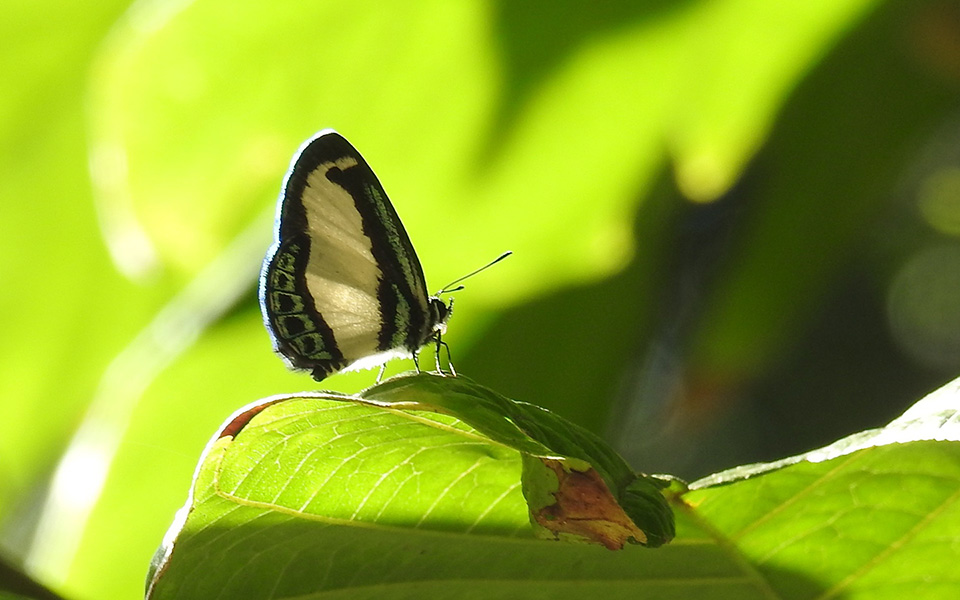
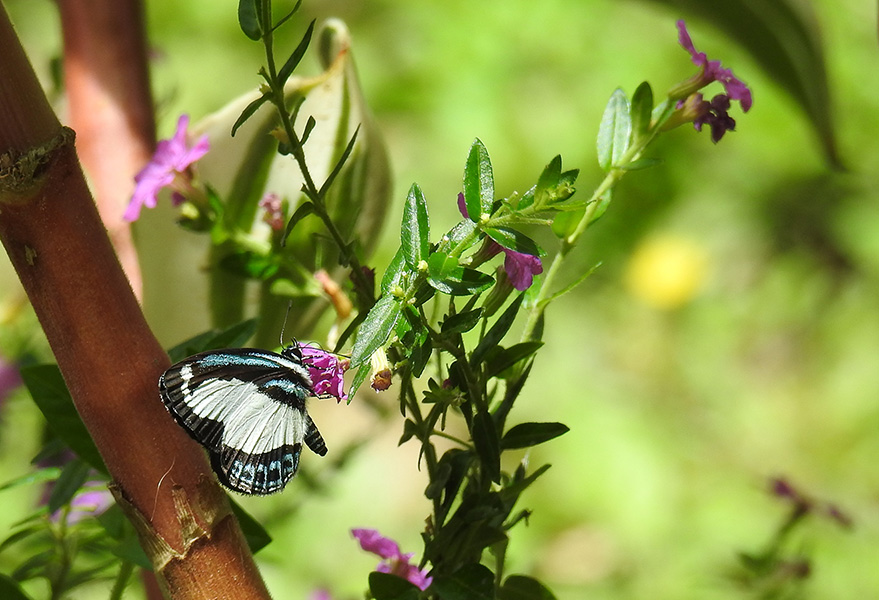
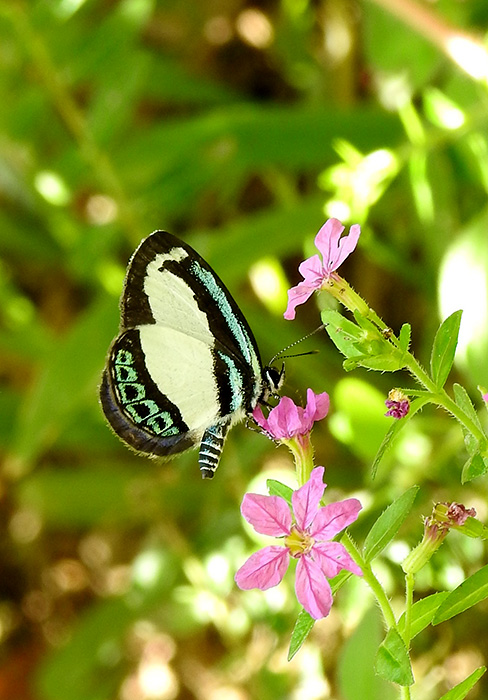
- Underside: pale grey or whitish with fine black markings and narrow green bands.
- Body: slender and greyish.
The delicate green bands on the underside of the wings give the butterfly its common name.
Habitat and Distribution
The Small Green‑banded Blue occurs mainly in tropical northern Australia, including parts of:
- northern Queensland
- the Northern Territory
- coastal tropical regions
It is also found across parts of Southeast Asia and the Pacific.
Typical habitats include:
- open woodland
- forest edges
- coastal scrub
- gardens near bushland
- areas with flowering shrubs and host plants
Because of its small size and quick flight, the butterfly can be easy to miss unless one watches closely.
Feeding Habits
Adult butterflies feed mainly on nectar from small flowers.
They commonly visit:
- native flowering shrubs
- small herbs and wildflowers
- garden plants that produce nectar
Their flight is usually rapid and close to the ground, with short bursts of movement between flowers.
Breeding and Host Plants
Like many lycaenid butterflies, the caterpillars of the Small Green‑banded Blue feed on particular host plants and may form associations with ants.
Host Plants
Caterpillars are known to feed on plants in families such as:
- Myrtaceae
- other tropical shrubs and small trees
Life Cycle
- Egg: laid on host plant leaves or flower buds.
- Caterpillar: small and flattened, often green to match the plant.
- Pupa: formed on vegetation or near the host plant.
- Adult butterfly: emerges to feed and reproduce.
The caterpillars often rely on camouflage and may be attended by ants, which sometimes protect them in exchange for sugary secretions.
Longevity
The full life cycle from egg to adult usually takes around four to five weeks.
Adult butterflies typically live one to two weeks, which is common for small butterflies in warm climates.
Indigenous Connections
Butterflies form part of the rich biodiversity of northern Australia’s tropical landscapes. First Nations peoples have long observed insects and their relationships with plants as part of the seasonal patterns of Country.
In traditional ecological knowledge, the presence of butterflies often reflects flowering plants and the health of vegetation. Because Australia has many Indigenous language groups, traditional names for specific butterfly species vary regionally and are not always widely documented in public sources.
Conservation Status and Threats
The Small Green‑banded Blue is currently considered not threatened, but it depends on healthy habitats with suitable host plants.
Potential threats include:
- habitat clearing
- loss of native vegetation
- pesticide use
- climate change affecting tropical ecosystems
Protecting natural vegetation helps maintain populations of this species and other small butterflies.
Why the Small Green‑banded Blue Matters
The Small Green‑banded Blue is a reminder that some of Australia’s most beautiful butterflies are also the smallest. Its shimmering blue wings and delicate green markings add subtle colour to tropical forests and woodland habitats.
By preserving native plants and supporting diverse ecosystems, we help ensure that this tiny butterfly continues to thrive in Australia’s northern landscapes.
Scientific References
Braby, M. F. Butterflies of Australia: Their Identification, Biology and Distribution
Atlas of Living Australia – Psychonotis caelius records
Australian Butterfly Conservation resources
CSIRO – Australian insect biodiversity
Wikipedia – Psychonotis caelius (Small Green‑banded Blue)
Photo Gallery