Strong Stick Insect
Slender, quiet, and remarkably well disguised, the Strong Stick Insect lives among the branches of Australia’s eastern forests and coastal bushland. Despite its delicate appearance, this species is resilient and well adapted, relying on patience, balance, and near‑perfect camouflage rather than size or strength to survive.
A Slender Forest Specialist
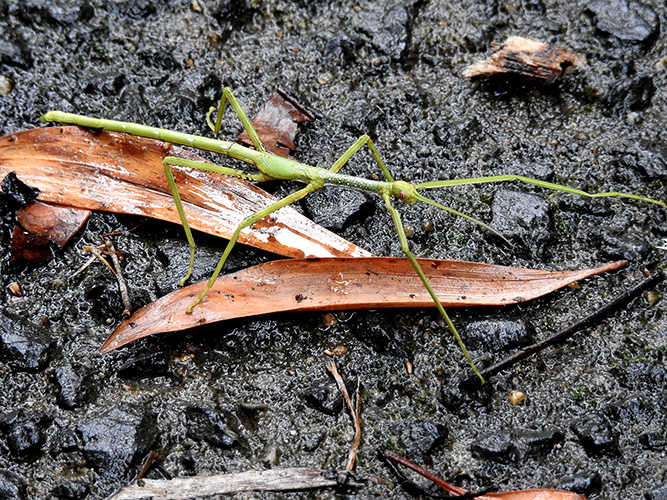
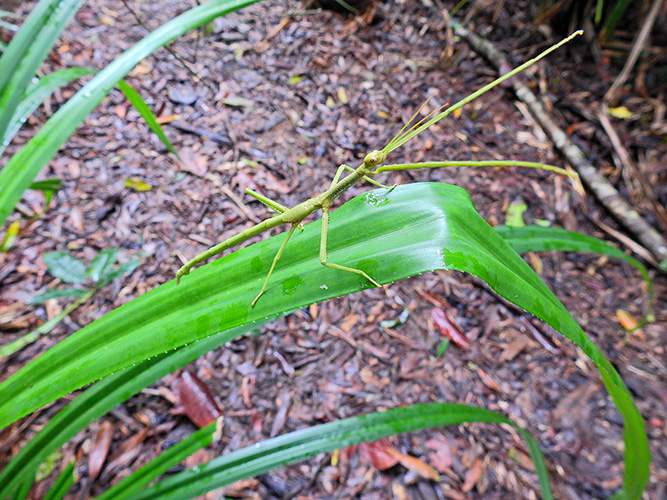
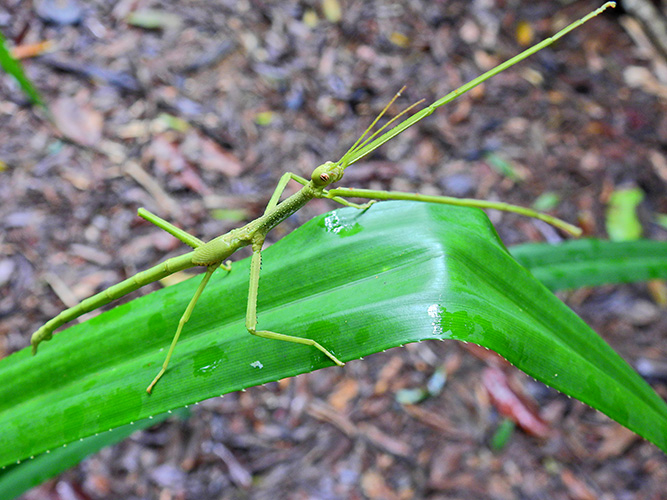
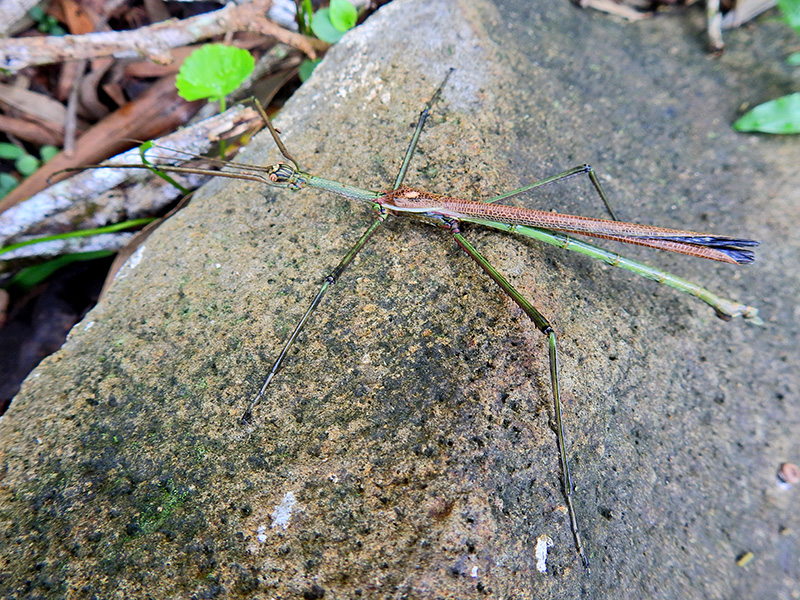
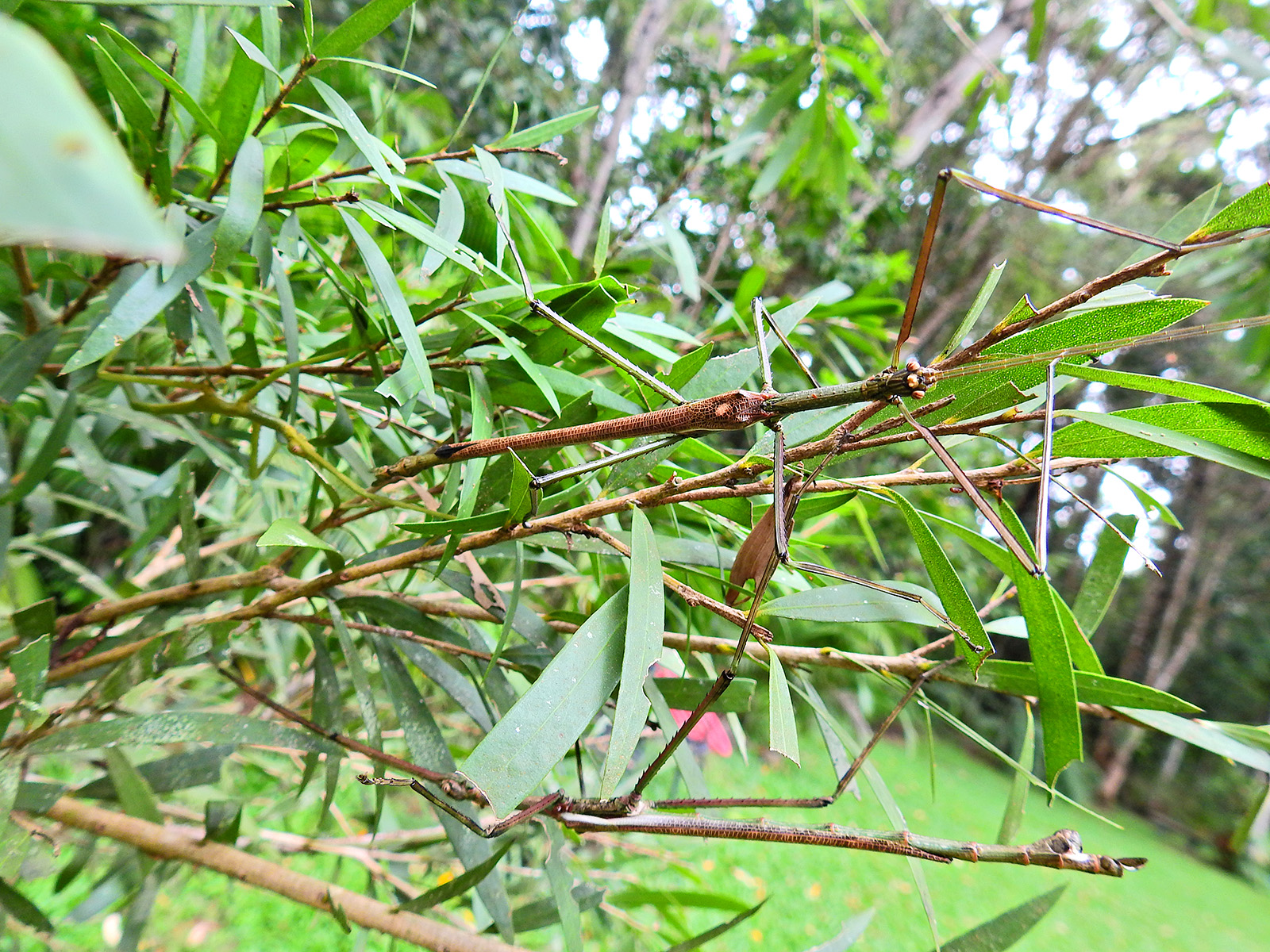
Anchiale briareus has an unusually long, narrow body, giving it a string‑like appearance that blends effortlessly with twigs and vines.
Adults usually grow to 12–16 centimetres in length.
Females are longer and heavier‑bodied than males.
Males are slimmer and more lightly built, adapted for movement.
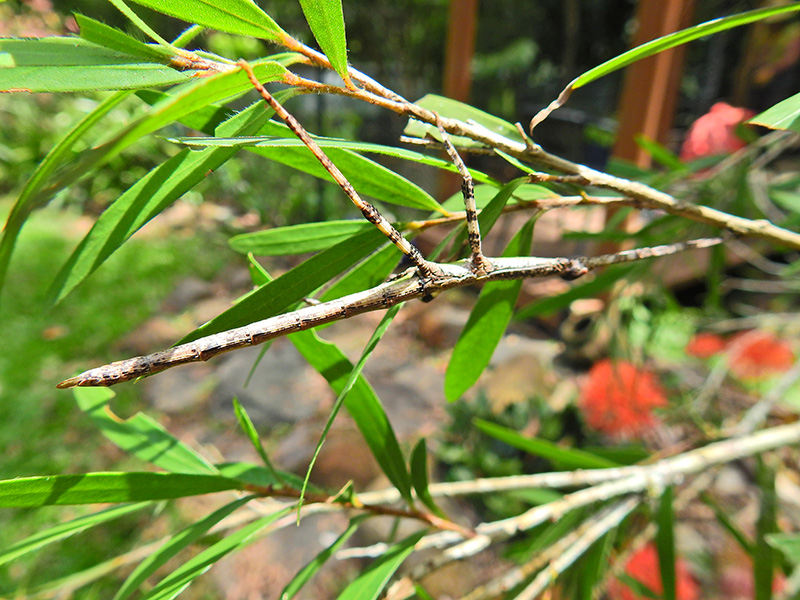
Colouration ranges from pale brown to greenish‑brown, allowing the insect to merge into a wide range of vegetation.
Habitat and Distribution
The Strong Stick Insect is found along eastern Australia, particularly in:
- Coastal and near‑coastal Queensland
- Northern and central New South Wales
It inhabits:
- Open forests and woodlands
- Coastal bushland
- Forest edges with climbing plants
- Well‑vegetated suburban gardens
Warm, humid environments with fine branches suit this species best.
Diet and Feeding
This species feeds mainly on the leaves of native trees and shrubs, especially eucalypts. In gardens, it may also use closely related native plants.
Its narrow body allows it to move through foliage with little disturbance, helping it remain hidden while feeding.
Behaviour and Defence
The Strong Stick Insect is nocturnal, feeding at night and resting during the day.
Its main defence is camouflage. When disturbed, it may:
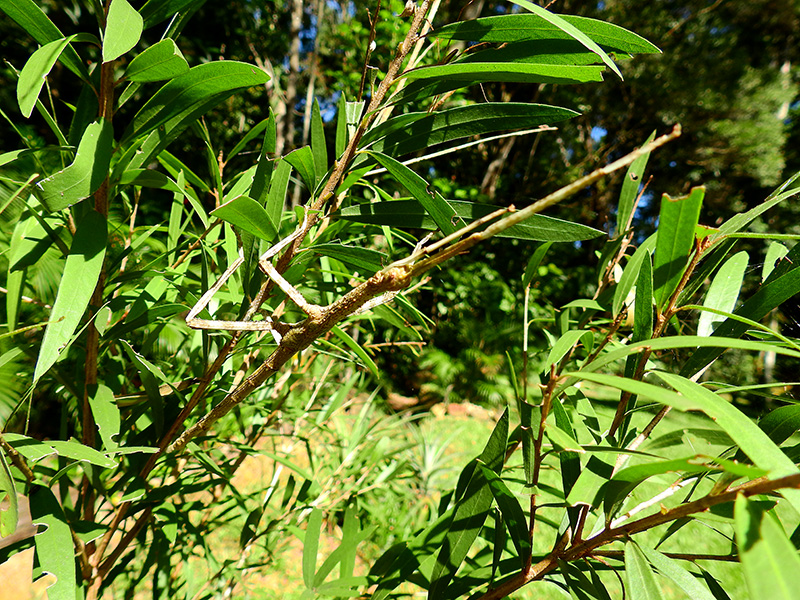
- Freeze completely, resembling a twig
- Sway gently like a branch in the breeze
- Drop to the ground and remain motionless
Unlike some larger stick insects, it does not rely on strong smells or dramatic threat displays.
Wings and Movement
Both sexes develop wings when mature.
Females are usually flightless or very poor fliers due to their size.
Males can fly short distances, mainly to locate females.
Wings are used sparingly and mainly as an escape option rather than for regular movement.
Breeding and Life Cycle
Breeding generally occurs during warmer months.
After mating, females lay eggs individually, allowing them to fall to the ground below. The eggs resemble tiny seeds and blend into leaf litter. Eggs may take several months to hatch.
Nymphs emerge as miniature adults and grow slowly, shedding their skin multiple times before reaching maturity. The full life cycle can take a year or more, depending on conditions.
In some populations, females are capable of parthenogenesis, producing offspring without mating, although sexual reproduction is more common.
Ecological Role
As a leaf‑eating insect, Anchiale briareus contributes quietly to plant growth regulation and forms part of the food web, supporting birds, reptiles, and other predators.
Its presence is a sign of healthy, well‑vegetated environments.
Conservation Notes
The Strong Stick Insect is not currently considered threatened, but it depends on intact vegetation.
Habitat clearing, pesticide use, and loss of native plants can reduce local populations. Protecting bushland and planting native trees and shrubs in gardens helps support this species.
Interesting Facts
- Known for its extremely slender, thread‑like body
- Relies almost entirely on camouflage for defence
- Males can fly; females cannot
- Eggs closely resemble plant seeds
- Completely harmless to humans
A Quiet Survivor
The Strong Stick Insect reminds us that survival in nature often depends on subtlety rather than strength. Through stillness and perfect disguise, Anchiale briareus remains an almost invisible yet essential part of Australia’s forest ecosystems.
Photo Gallery