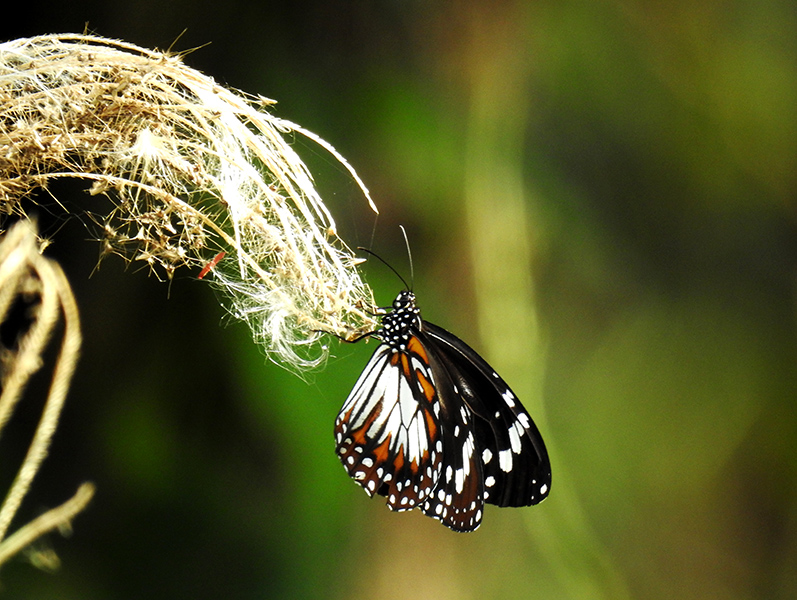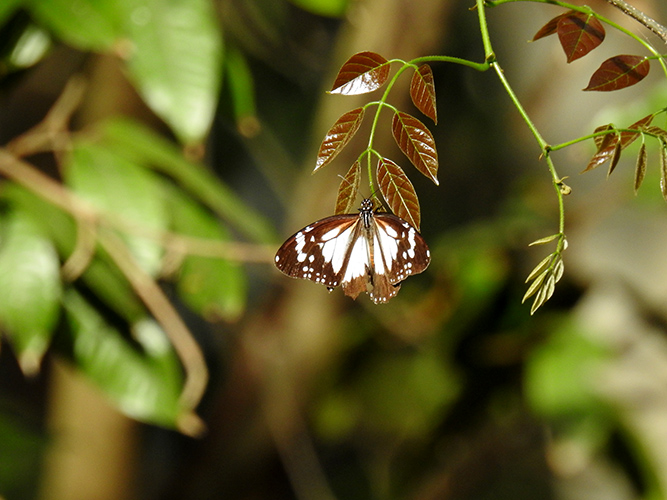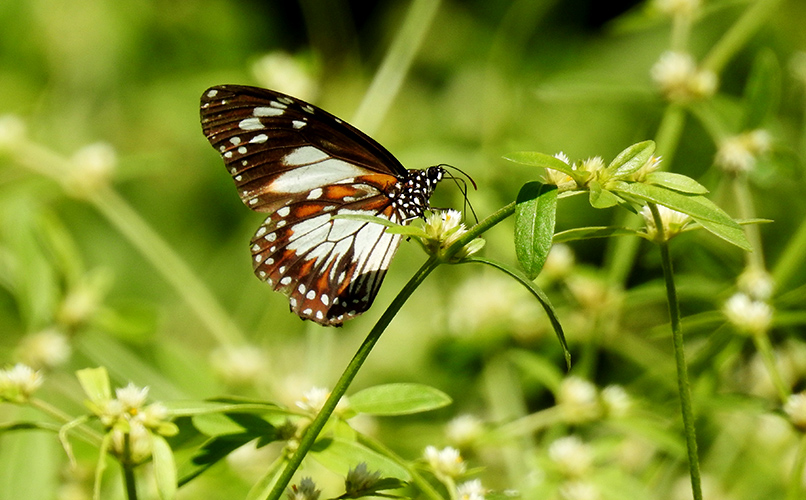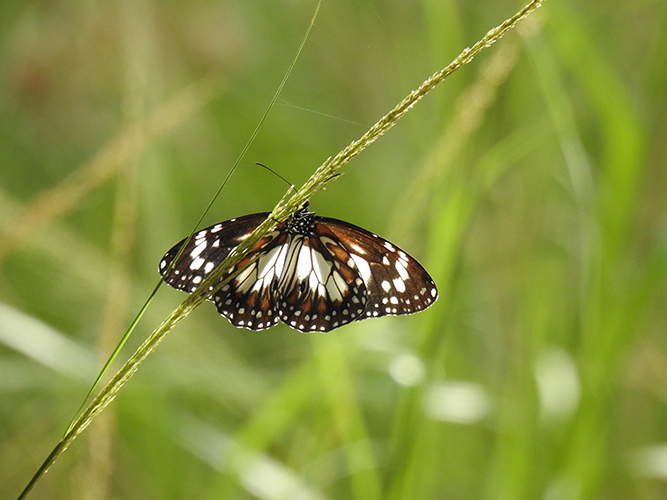
Swamp tiger Butterfly
Swamp Tiger Butterfly
When we think of butterfly habitats, we usually picture sunlit meadows or flowering suburban gardens. However, if you venture to the muddy, tangled edges of Australia’s tropical and subtropical mangroves, you will discover one of our most striking coastal residents: the Swamp Tiger Butterfly (Danaus affinis).
Also known as the Marsh Tiger or the Black-and-white Tiger, this member of the milkweed butterfly family brings a touch of velvet elegance to the salty estuaries and brackish creeks spanning from northern New South Wales right across coastal Queensland and the Northern Territory.
Deep Time Connections: Guardians of the Wetlands
For Traditional Owners across northern Australia, coastal wetlands, estuaries, and monsoon forests are deeply significant landscapes, rich with seasonal resources and cultural history.
In regions like Kakadu National Park, local Aboriginal representatives and Traditional Owners work closely alongside ecologists to monitor the health of these complex waterways. The presence of delicate wetland insects, like the Swamp Tiger, acts as a living indicator of environmental health. By protecting the vital mangrove vines and coastal ecosystems these butterflies rely on, we are also helping to preserve the profound Traditional Ecological Knowledge that has sustained these wetlands for tens of thousands of years.
A Hidden Flash of Colour: What Does It Look Like?
To spot a Swamp Tiger gracefully navigating the dense mangrove roots is a true visual delight.
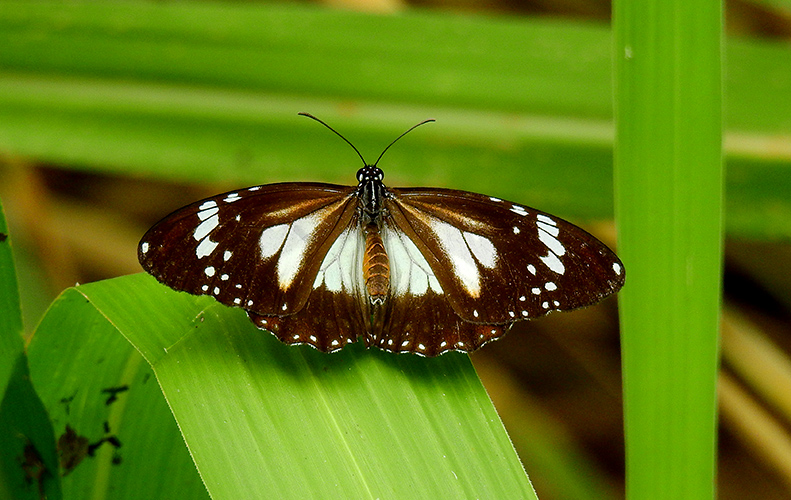
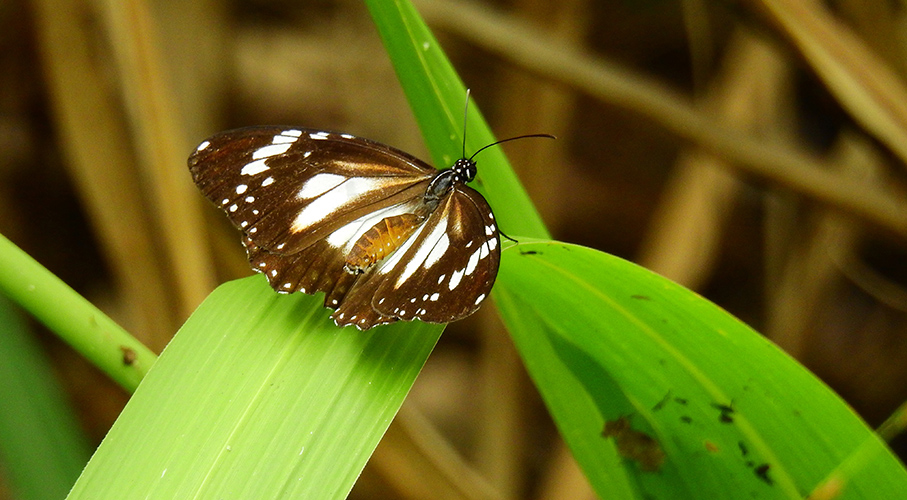
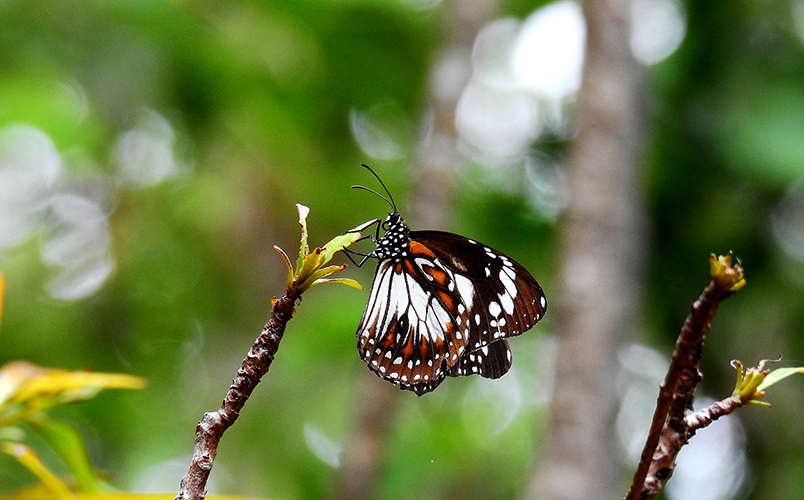
- The Adult Butterfly: They are a medium-sized butterfly with a wingspan of roughly 60 millimetres. From above, their wings display a stark, high-contrast pattern of velvety black heavily splashed with crisp white spots and streaks. But it is when they fold their wings that the real magic happens: the underside reveals a similar black-and-white pattern, but the hindwings are beautifully bordered with a vibrant, glowing orange.
The Caterpillar: The Swamp Tiger larvae are just as spectacular as the adults. They boast a deep blue body patterned with stark white and yellow bands and spots. Adding to their striking look, they sport three pairs of fleshy black tentacles (filaments) along their back.
The Pupa: When it is time to transform, the caterpillar forms a smooth, jade-green or earthy-brown chrysalis. Much like other tigers and wanderers, it is adorned with a brilliant, metallic gold ring around its widest part, often found hanging delicately from a coastal reed.
The Wetland Cycle: Breeding and Longevity
The Swamp Tiger’s life is intimately tied to the salty, humid conditions of the coast.
- The Breeding Cycle: In Australia’s warm, tropical northern regions, the Swamp Tiger can produce successive broods throughout the year. Females fly low over the brackish water, searching for the perfect nursery. They lay single, pale yellow, bullet-shaped eggs on the leaves of their highly specific host plants—primarily the native Mangrove Vine (Ischnostemma carnosum, also known as Cynanchum carnosum).
- A Fleeting Life: Because they thrive in warm, humid environments, their development from egg to butterfly is rapid. Once the adult emerges from its golden-ringed chrysalis, it typically lives for only a few weeks. However, these weeks are spent in a flurry of purposeful activity, ensuring the next generation is secured before the coastal weather turns.
Fascinating Facts: Fussy Eaters and Chemical Warfare
- A Highly Toxic Diet: Like the Lesser Wanderer, the Swamp Tiger caterpillar feeds on toxic plants. The Mangrove Vine contains potent chemical compounds (alkaloids) which the caterpillar absorbs. These toxins are passed on to the adult butterfly, making them incredibly distasteful to predators like birds. Their bold black, white, and orange colouring is nature’s ultimate warning sign!
- Very Fussy Drinkers: While some butterflies will drink nectar from almost any blooming flower, the adult Swamp Tiger is notoriously fussy. They have a massive preference for the nectar of the native Sea Oxeye daisy (Wedelia biflora), which grows along the salty margins of the beach.
- Perfumed Courtship: The male Swamp Tiger utilizes the toxic chemicals gathered from his environment to create a potent sex pheromone. During courtship, he uses brush-like appendages at the tip of his abdomen to dust the female with this irresistible “perfume.”
Conservation Status and Environmental Threats
Currently, the Swamp Tiger is considered common within its specific range, and its population remains stable across the broader Southeast Asian and Australian coastlines.
However, because their survival is entirely dependent on a very narrow slice of the environment, they are incredibly vulnerable to localised habitat loss. The clearing of mangroves for coastal development, the draining of estuarine swamps, and the pollution of brackish creeks directly destroy the native vines they need to breed. If the mangroves disappear, the Swamp Tiger goes with them.
What Can We Do to Help the Species?
Protecting our wetland habitats is the most powerful way to support the Swamp Tiger. Here is how you can help:
- Protect the Mangroves: Support local landcare and conservation groups that focus on rehabilitating coastal wetlands, estuaries, and mangrove swamps. Protecting these areas safeguards the delicate Cynanchum carnosum vines.
- Plant Coastal Nectar Sources: If you live near the coast in Queensland, the Northern Territory, or northern NSW, planting native coastal flora—especially their absolute favourite, the Sea Oxeye daisy (Wedelia biflora)—provides an essential nectar refuelling station for the adults.
- Reduce Runoff: Everything that goes down our suburban drains eventually reaches the coast. Minimising the use of harsh synthetic fertilizers and chemical pesticides in your garden ensures our brackish creeks and mangrove swamps remain clean and healthy for all delicate aquatic and insect life.
Scientific & Cultural References
- Atlas of Living Australia. Danaus affinis: Marsh Tiger.
- Braby, M. F. (2000). Butterflies of Australia: Their Identification, Biology and Distribution. CSIRO Publishing.
- Department of Agriculture, Water and the Environment. Butterflies in wetlands of Kakadu National Park, Northern Australia. (Details on Indigenous representative research and wetland species).
- Herbison-Evans, D., & Crossley, S. Danaus affinis (Fabricius, 1775) – Australian Lepidoptera.
- Grokipedia. Danaus affinis: Taxonomy, Life Cycle, and Conservation.
Photo Gallery