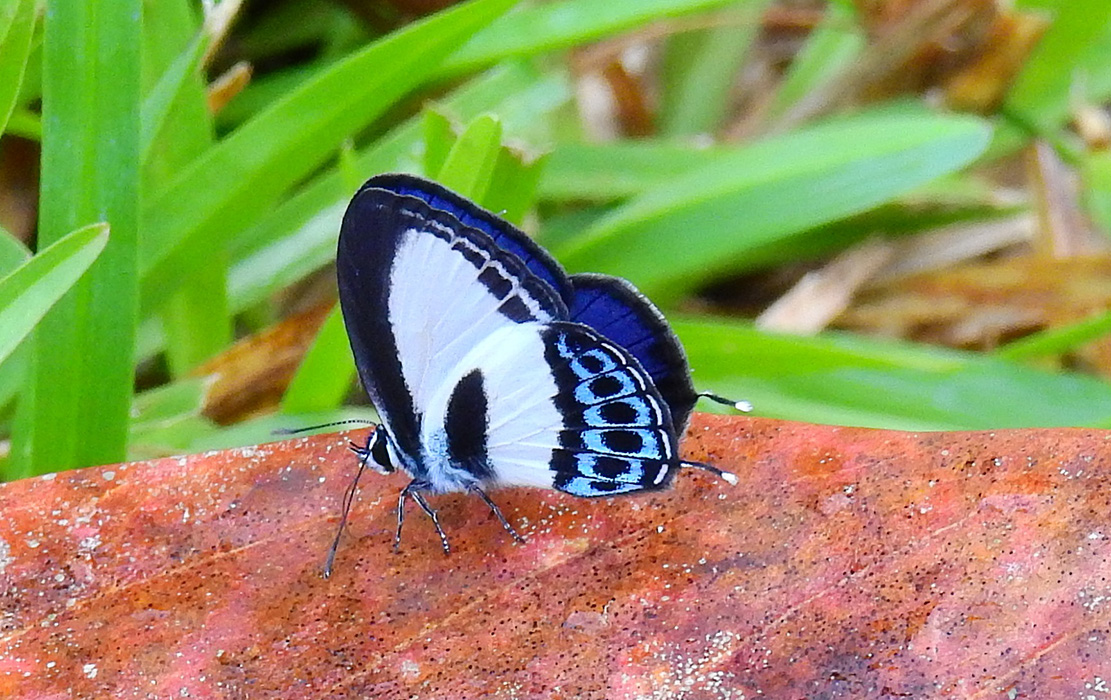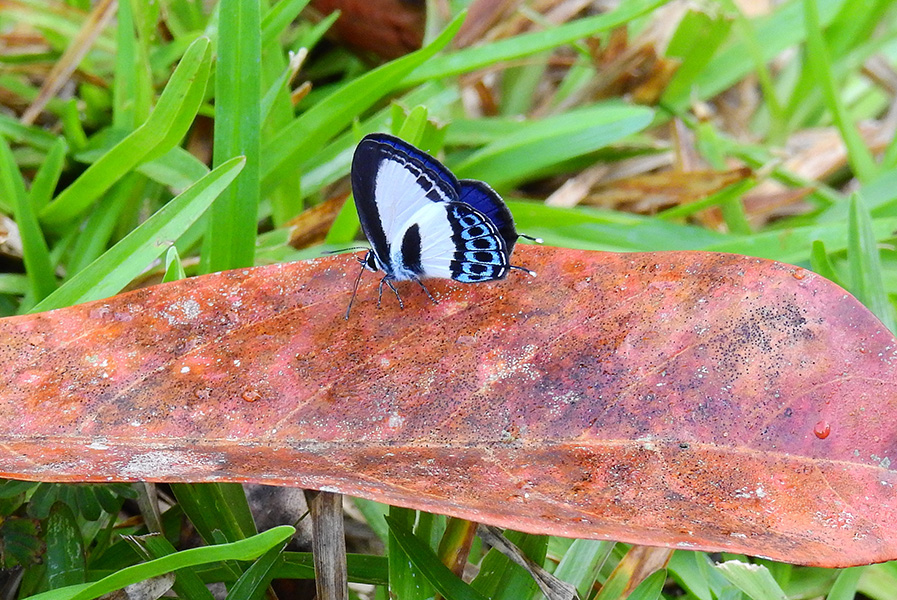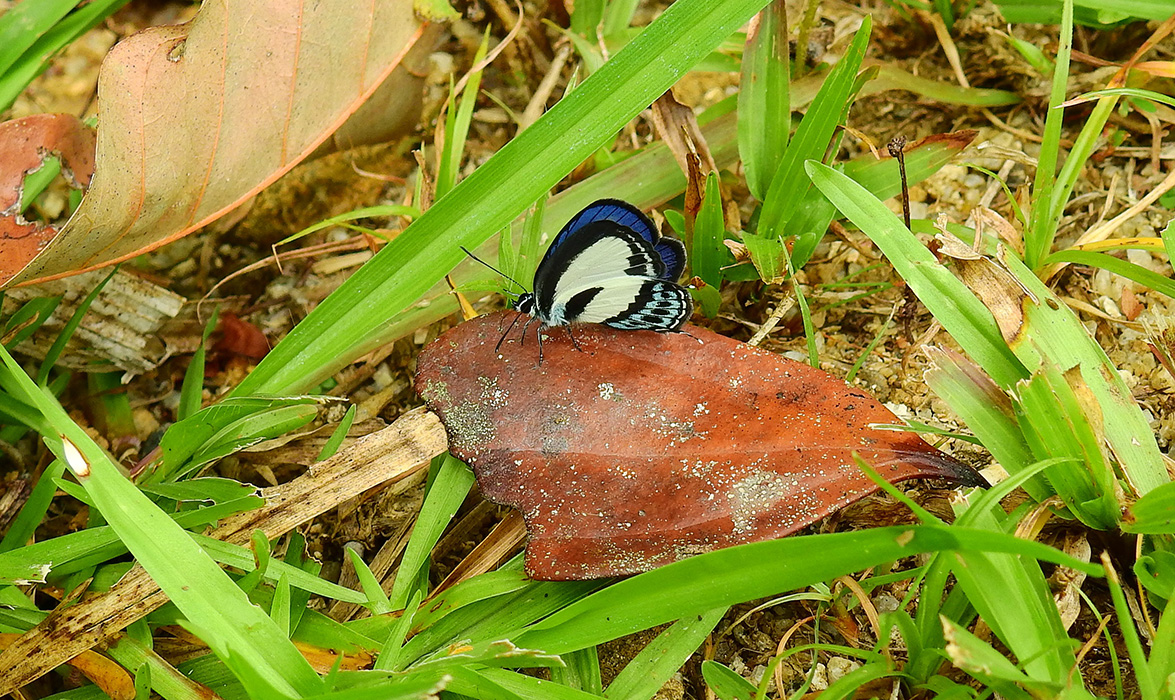
Tailed Green-banded Line-blue Butterfly
Tailed Green‑banded Line‑blue Butterfly
The Tailed Green‑banded Line‑blue (Nacaduba cyanea) is a small but beautiful butterfly found across northern and eastern Australia. With its shimmering blue upper wings and delicate green band across the underside, this butterfly is a member of the Lycaenidae family, the group often known as the blues, coppers, and hairstreaks.
Although tiny, the species is surprisingly widespread and can often be seen fluttering around shrubs, woodland edges, and gardens where suitable host plants grow.
What Does the Tailed Green‑banded Line‑blue Look Like?
The Tailed Green‑banded Line‑blue is a small butterfly with a wingspan of about 25–35 millimetres.
Key identifying features include:
- Upper wings (male): bright violet‑blue with narrow dark borders
- Upper wings (female): brown with small blue patches near the body
- Underside: pale grey or whitish with fine black markings and a distinct green band across both wings
- Tail: a small tail-like projection on the hindwing
- Body: slender and grey
The tiny tail and green band give the species its common name.
Habitat and Distribution
The butterfly occurs across northern and eastern Australia, particularly in warm regions including:
- Queensland
- Northern Territory
- northern New South Wales
- parts of Western Australia
It also occurs widely across South and Southeast Asia and the Pacific.
In Australia it inhabits:
- open woodland
- forest edges
- coastal vegetation
- gardens and parks
- roadside shrubs
Because it is small and fast‑moving, it can be easy to miss unless you are watching closely.
Feeding Habits
Adult Tailed Green‑banded Line‑blues feed on nectar from small flowers.
They commonly visit:
- native flowering shrubs
- herbs and small wildflowers
- garden plants
Their flight is quick and erratic, usually staying close to vegetation.
Breeding and Host Plants
Like many members of the Lycaenidae family, the caterpillars feed on plants in the legume family (Fabaceae).
Typical host plants include:
- small shrubs
- legumes and vines
- native plants growing in woodland habitats
Life cycle
- Egg – laid on leaves or flower buds
- Caterpillar – small, flattened, and green for camouflage
- Pupa – formed on vegetation near the host plant
- Adult butterfly – emerges to feed and reproduce
Many lycaenid caterpillars, including this species, may have associations with ants, which protect them from predators.
Longevity
The full life cycle from egg to adult usually takes about four to five weeks depending on temperature and food availability.
Adult butterflies generally live one to two weeks, which is typical for small butterflies.
Indigenous Connections
Butterflies are part of the seasonal rhythms of Australian landscapes that have long been observed by First Nations peoples. Their appearance often follows flowering plants and seasonal rainfall.
In traditional ecological knowledge, insects such as butterflies reflect the health of vegetation and the cycles of Country. Because Australia has many Indigenous language groups, traditional names for butterflies vary regionally and are not always widely recorded in public sources.
Conservation Status and Threats
The Tailed Green‑banded Line‑blue is currently considered not threatened and remains widespread across suitable habitats.
However, local populations can be affected by:
- habitat clearing
- pesticide use
- loss of native host plants
Maintaining native vegetation helps support this species and many other butterflies.
Why the Tailed Green‑banded Line‑blue Matters
Although small, the Tailed Green‑banded Line‑blue is a delightful part of Australia’s butterfly diversity. Its bright blue wings, delicate tail, and quick fluttering movements add subtle beauty to woodland and garden environments.
Protecting native plants and reducing pesticide use helps ensure this tiny butterfly continues to thrive.
Scientific References
Braby, M. F. Butterflies of Australia: Their Identification, Biology and Distribution
Atlas of Living Australia – Nacaduba cyanea records
Australian Butterfly Conservation resources
CSIRO – Australian insect biodiversity
Wikipedia – Nacaduba cyanea (Tailed Green‑banded Line‑blue
Photo Gallery