Australian Golden Orb-Weaver Spiders
Golden Orb‑Weaver Spiders of Australia
Giants of silk, sunlight, and quiet patience
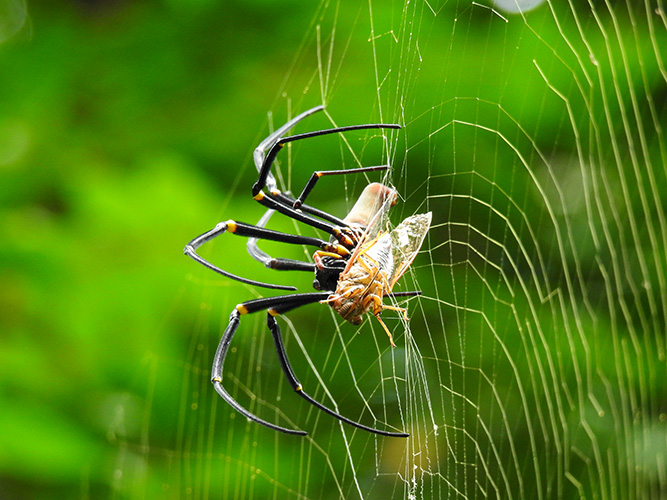
Across Australian gardens, forests, and coastal bushland, the Golden Orb‑Weaver spiders quietly spin some of the most remarkable webs on Earth. When the light is just right, their silk glows like threads of warm honey, suspended between trees and shrubs. These spiders are not only visually striking, but scientifically fascinating, playing an important ecological role while rarely posing any threat to people.
What Is a Golden Orb‑Weaver?
Golden Orb‑Weavers belong to the genus Trichonephila (formerly Nephila). They are known for:
- Golden‑coloured silk, visible in sunlight
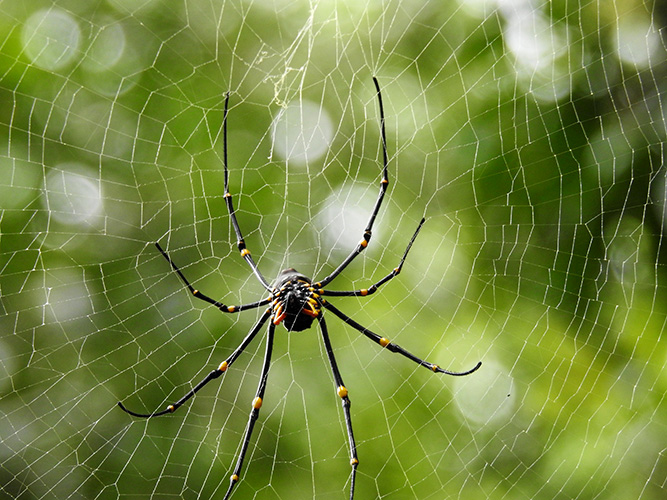
- Large, asymmetrical orb webs, often over a metre wide
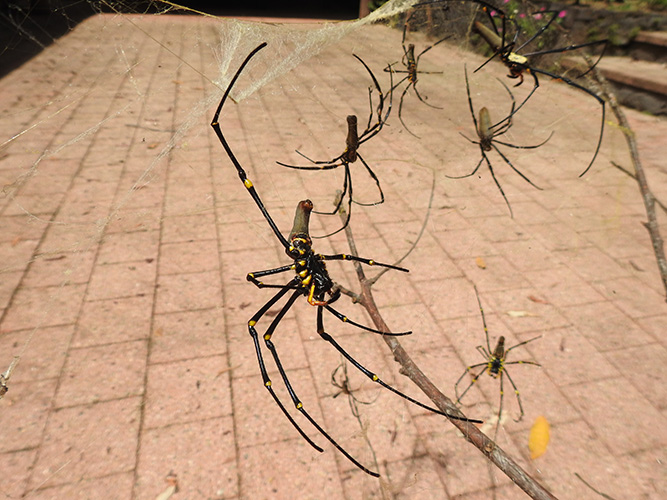
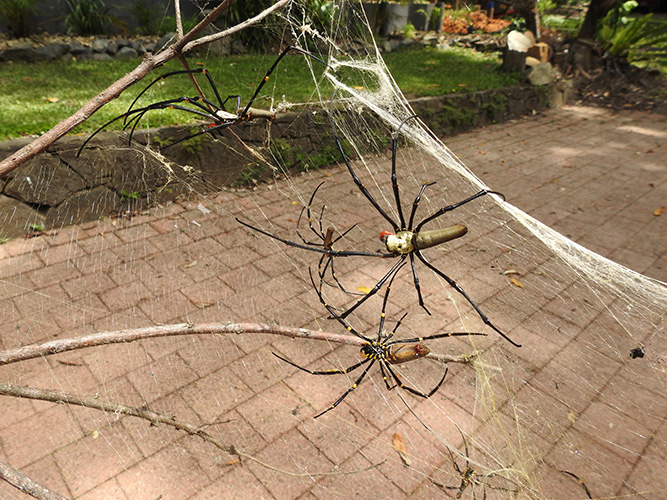
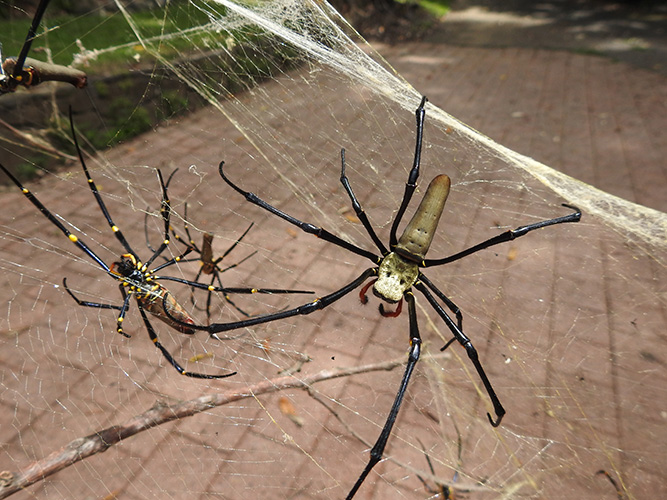
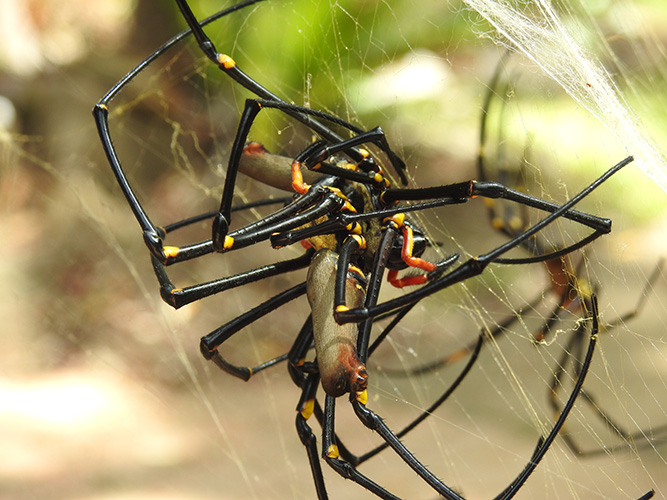
- Strong sexual size dimorphism, where females are vastly larger than males
- A calm, non‑aggressive nature
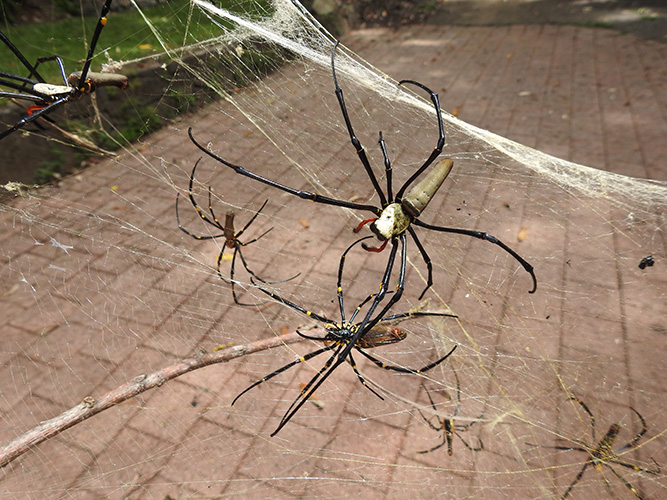
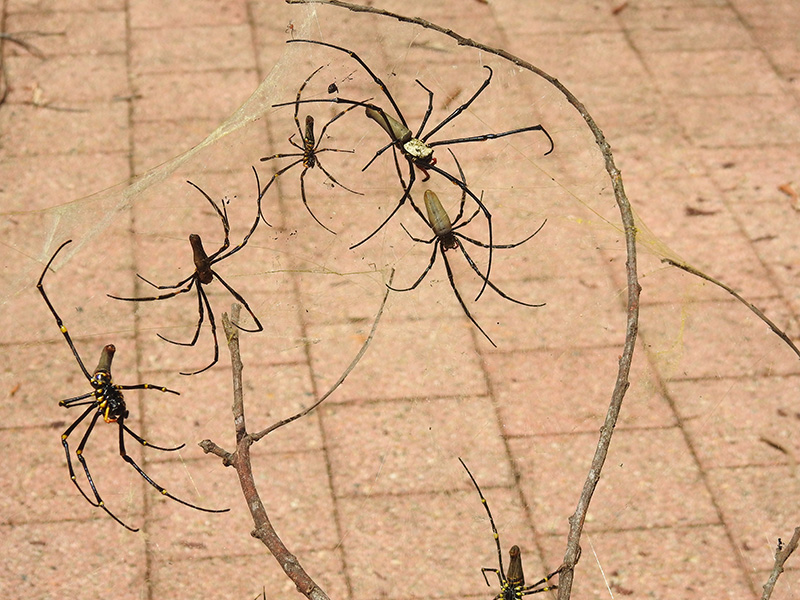
Web Placement: These spiders are strategic architects. They often build their webs in high-traffic insect flight paths, frequently along forest edges, between trees, or across pathways. They are also known to build “barrier webs” of non-sticky silk around their main web to protect it from large flying objects like birds. Their webs often remain in the same place for weeks or months, repaired and reused rather than rebuilt daily.
Co-Habitation is Complicated: You might sometimes see tiny, reddish “kleptoparasitic” spiders (often from the genus Argyrodes) living on the Golden Orb Weaver’s web. These little opportunists don’t build their own webs; instead, they steal small insects that get caught in the larger spider’s trap.
Australian Golden Orb‑Weaver Species
Australia is home to two confirmed native Golden Orb‑Weaver species, each with distinct traits and behaviours.
1. Australian Golden Orb‑Weaver
Trichonephila edulis
(Formerly Nephila edulis)
The most widespread and familiar species
Identification
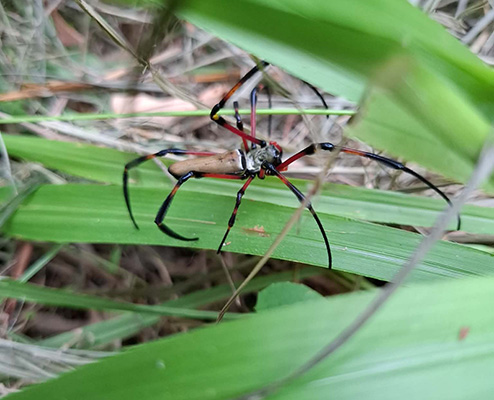
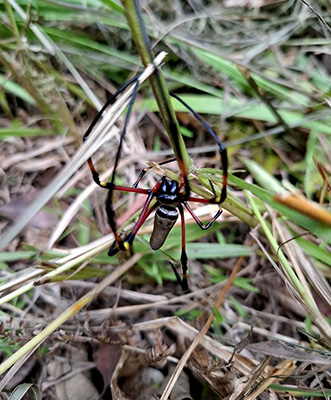
- Female body length: 3–4 cm (legs can span over 10 cm)
- Colour: silvery‑grey carapace, long dark legs with pale joints
- Abdomen: elongated, often cylindrical
- Males: tiny (around 5–6 mm), brownish and easily overlooked
Distribution & Habitat
- Found along eastern Australia, from Queensland to Victoria
- Common in:
- Forest edges
- Gardens
- Coastal scrub
- Bushland tracks
Behaviour & Tendencies
- Builds very large webs, often across walking paths or between trees
- Webs may contain barrier threads above and below to deter birds
- Females remain in the same web for long periods
- Males live on the edge of the female’s web, cautiously waiting for mating opportunities
Venom & Human Interaction
- Venom is mild and not medically significant
- Bites are rare and usually occur only if handled
- Symptoms, if any, are similar to a mild bee sting
2. Tiger Spider / Giant Golden Orb‑Weaver
Trichonephila plumipes
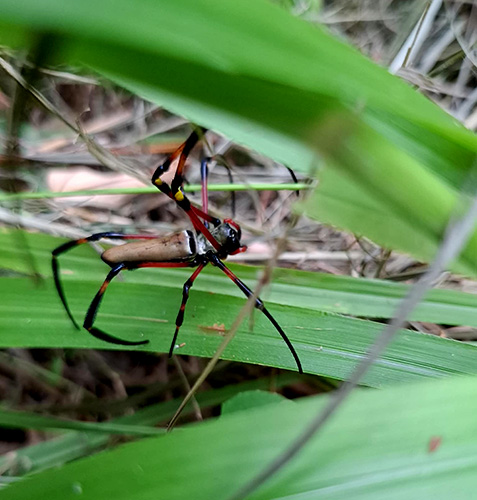
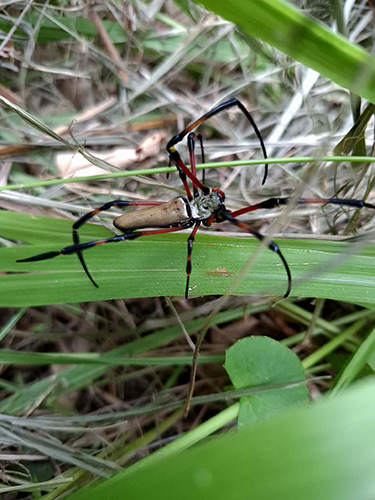
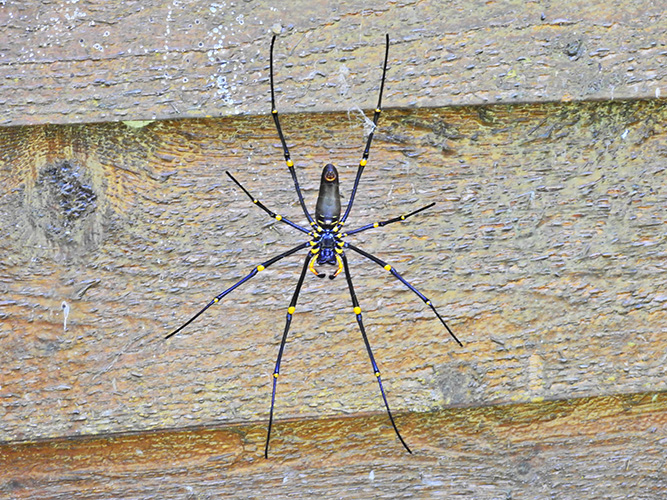
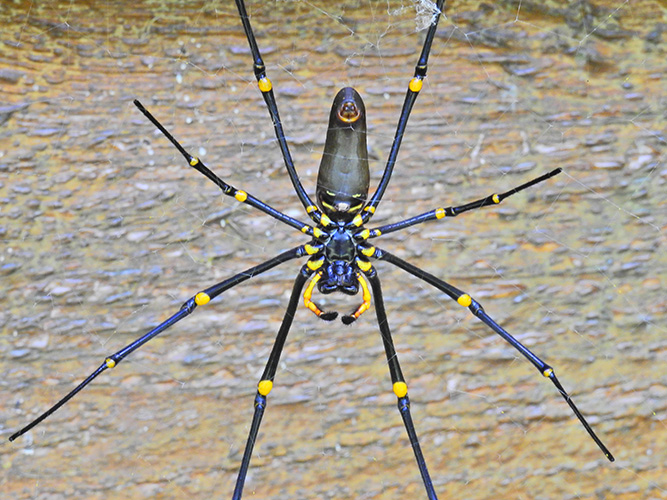
The bold and beautifully marked species is sometimes called the “tiger spider” because of its leg markings, not aggression.
Identification
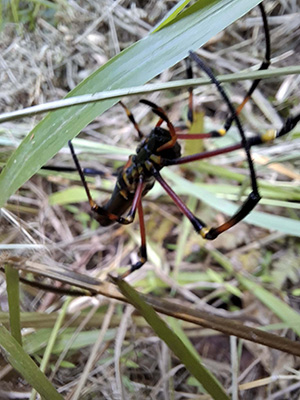
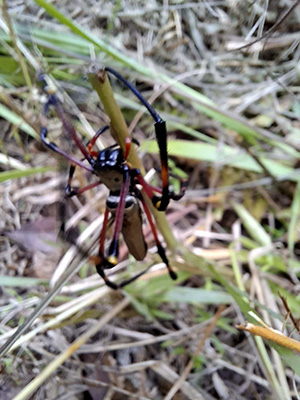
- Females have distinct yellow and black banding on the legs
- Abdomen often darker and more robust than T. edulis
- Males are tiny, reddish‑brown, and highly mobile.
Distribution & Habitat
- Primarily found in eastern Australia, especially:
- New South Wales
- Queensland
- Prefers:
- Open woodland
- Suburban gardens
- Bushland with good airflow
Behaviour & Tendencies
- More visually striking and active during daylight
- Webs are often positioned higher and more exposed
- Males show risky mating behaviour, sometimes sacrificing themselves to improve reproductive success
Venom & Human Interaction
- Venom is not dangerous to humans
- Spider is shy and retreats when disturbed
- Frequently mistaken as dangerous due to size and colouring.
Shared Characteristics of Australian Golden Orb‑Weavers
| Feature | Description |
|---|---|
| Web silk | Golden hue, extremely strong |
| Web size | Up to 1.5 metres wide |
| Activity | Mostly diurnal (day‑active) |
| Diet | Flying insects, including mosquitoes and flies |
| Lifespan | Females may live over a year |
Why Is Their Silk Golden?
The golden colour comes from xanthurenic acid compounds in the silk. Scientists believe the colour may:
- Attract insect prey
- Strengthen the silk under sunlight
- Help camouflage the web among foliage and light
When the morning sun strikes a web, it can glow like spun glass, shimmering gently in the breeze.
Ecological Importance
Golden Orb‑Weavers play a quiet but vital role:
- Natural pest control by capturing large numbers of flying insects
- Supporting biodiversity by maintaining insect population balance
- Acting as prey for birds and reptiles, linking food chains
Their presence is often a sign of a healthy, insect‑rich ecosystem.
Living Alongside Golden Orb‑Weavers
If a web appears in an inconvenient place:
- Avoid destroying it unless necessary
- Gently relocate the spider using a long stick and container
- Move webs in the evening when the spider is less active
These spiders are far more beneficial than harmful, and many gardeners choose to leave them undisturbed.
Photo Gallery