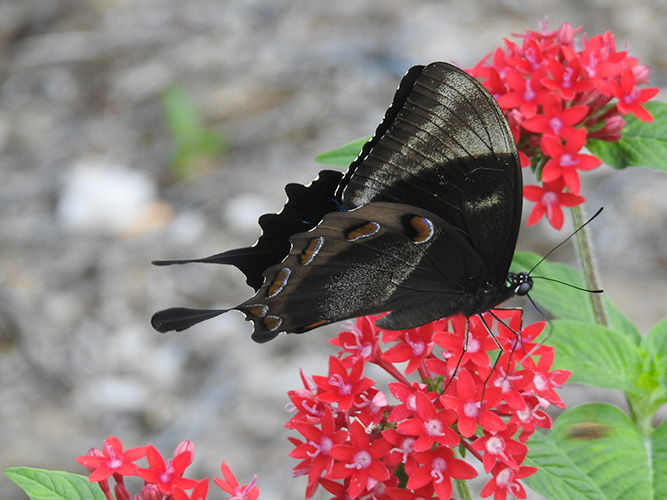
Ulysses butterfly
The Ulysses Butterfly
Introduction
In the dappled light of the North Queensland rainforests, one creature stands out with a brilliance that rivals the sky itself. The Ulysses Butterfly (Papilio ulysses), also known as the Blue Mountain Swallowtail, is one of Australia’s most iconic and distinct insects.
Famous for its shocking electric blue wings, this large swallowtail is a symbol of the Wet Tropics. Whether you are a scientific researcher or a nature enthusiast, witnessing the frantic, flashing flight of the Ulysses is an unforgettable encounter.
What They Look Like
The Ulysses is a master of visual contrast, utilizing “structural colour” rather than just pigment to create its dazzling display.
- Wingspan: They are large butterflies, with a wingspan typically ranging between 10 cm and 13 cm (4 to 5 inches).
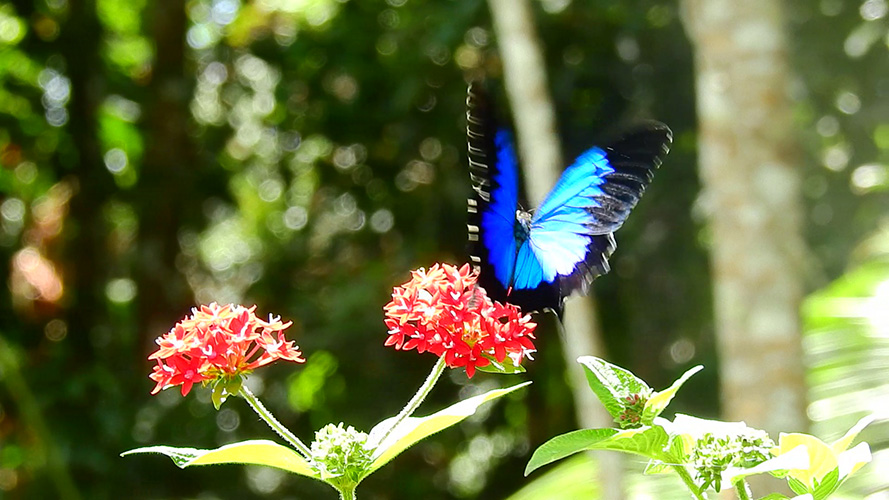
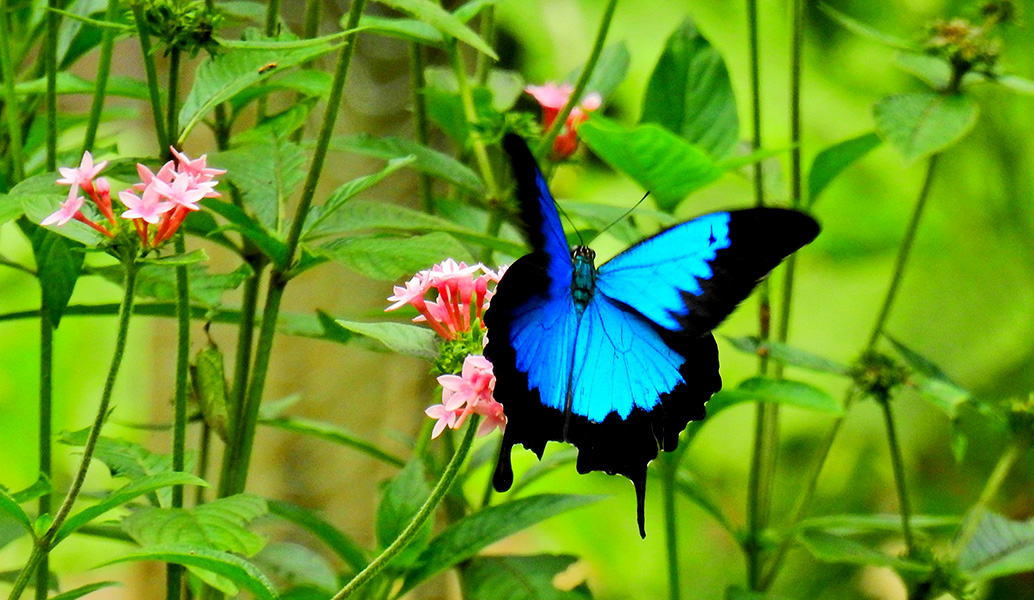
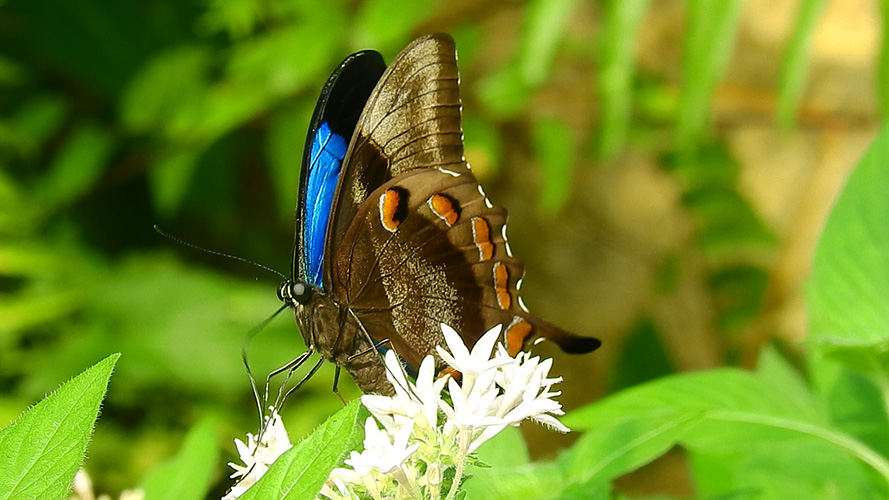
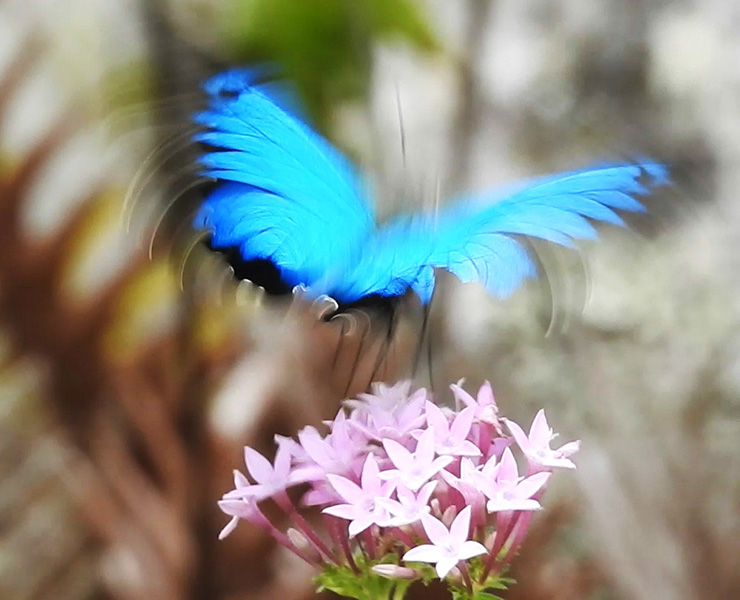
- The Upper Side: The upper wings are a brilliant, iridescent electric blue, bordered by a velvety black. The blue is produced by the microscopic structure of the wing scales reflecting light—much like a prism.
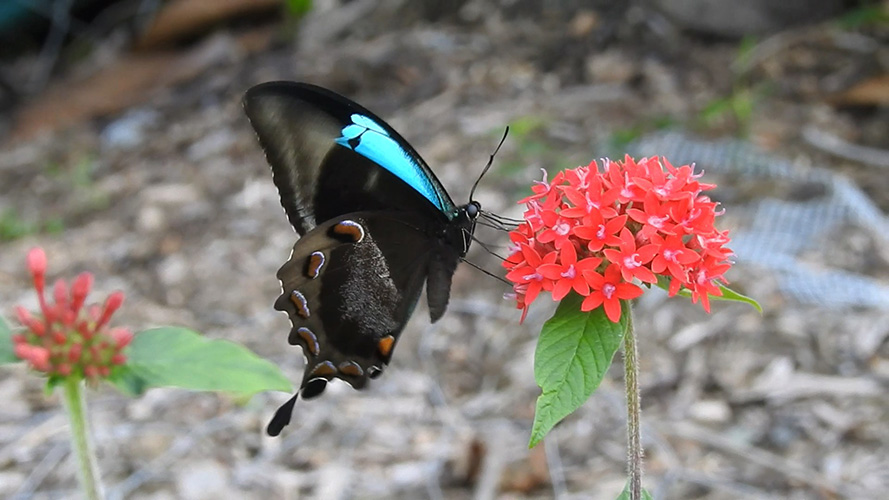
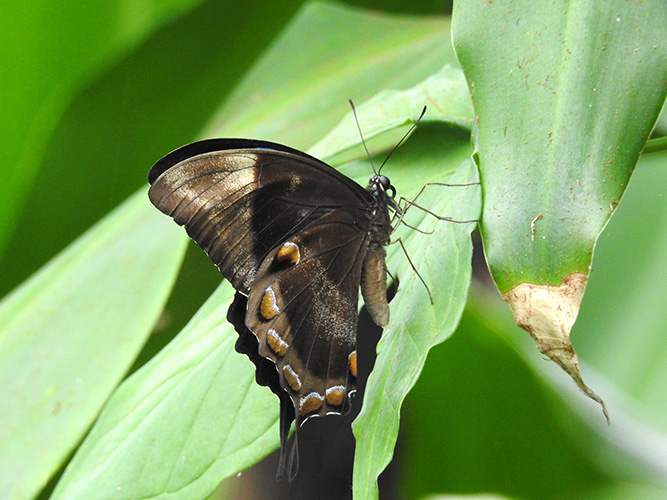
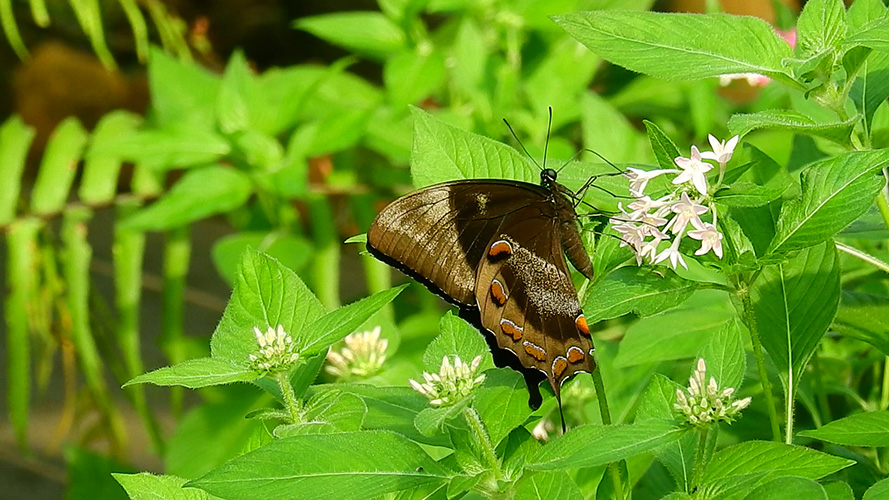
- The Under Side: To survive in a forest full of predators, the underside of the wing is a cryptic, mottled brown. When the butterfly lands and closes its wings, it perfectly mimics a dead leaf, allowing it to vanish into the shadows of the canopy.
- Sexual Dimorphism: Males and females look slightly different. The male usually has a more solid patch of blue, while the female often has small crescents of blue within the black back border of her hindwings.
Breeding and Life Cycle
The life cycle of Papilio ulysses is intimately tied to the flora of the Australian rainforest.
- Host Plants: The primary host tree is the Pink Euodia (or Corkwood, Melicope elleryana). This tree features clusters of bright pink flowers along its branches, and female butterflies will seek out fresh regrowth on these trees to lay their eggs.
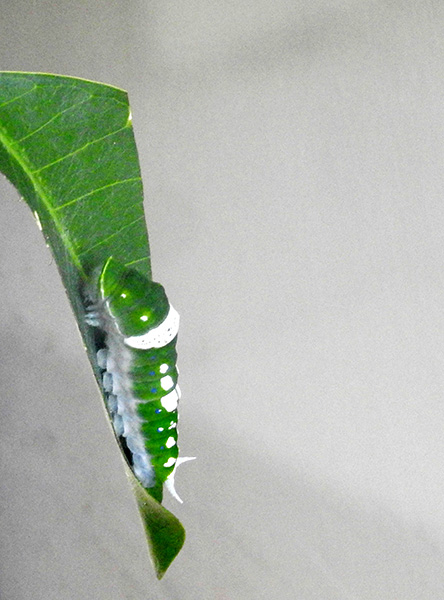
- The Caterpillar: The larvae are well-camouflaged. They are green with a white band across their back, making them look deceptively like a fresh leaf or a bird dropping to deter predators.
- The Chrysalis: When ready to pupate, the caterpillar forms a green or brown chrysalis, attached to the plant stem by a strong silk girdle (a characteristic of the Papilionidae family).
Longevity
Like many tropical butterflies, the adult stage is the fleeting finale of a long development.
- Wild Lifespan: In the wild, an adult Ulysses butterfly typically lives for about 4 to 8 weeks.
- Survival Rates: Their survival depends heavily on avoiding predators like birds and spiders, and finding sufficient nectar sources, such as the red flowers of the Umbrella Tree or the simple Lantana.
Indigenous Connection
The Ulysses Butterfly holds significance for the Rainforest Aboriginal peoples of North Queensland, including the Djabugay and Yirrganydji people.
In many local indigenous cultures, butterflies are associated with the spirit world. The sudden appearance of a bright butterfly is sometimes viewed as a sign of a change in season or a visit from an ancestral spirit. The intense blue of the Ulysses is often reflected in contemporary Indigenous art from the region, symbolising the vibrancy of the rainforest country (Country).
Threats to the Species
While the Ulysses Butterfly is not currently listed as endangered, its future is fragile due to specific environmental pressures:
- Habitat Fragmentation: The clearing of rainforests for development and agriculture breaks up the “corridors” that butterflies use to travel between food sources and breeding grounds.
- Climate Change: As a tropical species, they are sensitive to temperature changes. Rising temperatures can force populations to higher altitudes, reducing their available range.
- Invasive Weeds: Introduced plant species can choke out the native seedlings of the Pink Euodia, reducing the number of available host trees for the next generation.
How We Can Protect Them
Conservation is a community effort, and even small actions can help preserve the “Blue Mountain Swallowtail” for future generations:
- Plant Native Hosts: Gardeners in tropical and subtropical regions can plant the Pink Euodia (Melicope elleryana) or the Little Evodia (Melicope rubra). Providing these host trees creates essential breeding corridors in urban areas.
- Reduce Chemical Use: Avoid using pesticides and herbicides in the garden, as butterflies and their caterpillars are highly sensitive to chemicals.
- Support Rainforest Conservation: Supporting organisations like the Wet Tropics Management Authority helps protect the large tracts of forest these butterflies call home.
Interesting Facts
- The “Blue” Obsession: Male Ulysses butterflies are aggressively territorial and attracted to the colour blue. They will often dive-bomb tourists wearing blue hats or shirts, mistaking them for a rival male or a potential mate.
- Fast Flyers: Unlike the slow, gliding Birdwings, the Ulysses is a high-speed, erratic flyer. This erratic movement makes them incredibly difficult for birds to catch mid-air.
- Global Relatives: While iconic to Australia, the Papilio ulysses is also found in Papua New Guinea and parts of Indonesia, though the Australian subspecies (joesa) is unique to our continent.
References & Further Reading
- Braby, M. F. (2004). The Complete Field Guide to Butterflies of Australia. CSIRO Publishing.
- Orr, A., & Kitching, R. (2010). The Butterflies of Australia. Allen & Unwin.
- Wet Tropics Management Authority. (n.d.). Rainforest Wildlife. Government of Queensland.
- Common, I. F. B., & Waterhouse, D. F. (1981). Butterflies of Australia. Angus & Robertson.
Photo Gallery