Union Jack Butterfly
The Flag of the Forest: Union Jack Butterfly
The Union Jack Butterfly (Delias mysis) is one of Australia’s most striking tropical butterflies. With its bright white wings, bold black borders, and brilliant red underside, it looks almost like a fluttering emblem floating through the canopy. Its colourful pattern is so distinctive that it has earned the common name Union Jack.
Belonging to the Pieridae family, the same group as many of Australia’s white and yellow butterflies, the Union Jack Butterfly is found mainly in the tropical north. It is a beautiful example of how butterflies can be both visually stunning and tightly linked to native plants.
What Does the Union Jack Butterfly Look Like?
The Union Jack Butterfly is a medium-sized butterfly with a wingspan of about 55–70 millimetres.
Its appearance is bold and unmistakable:
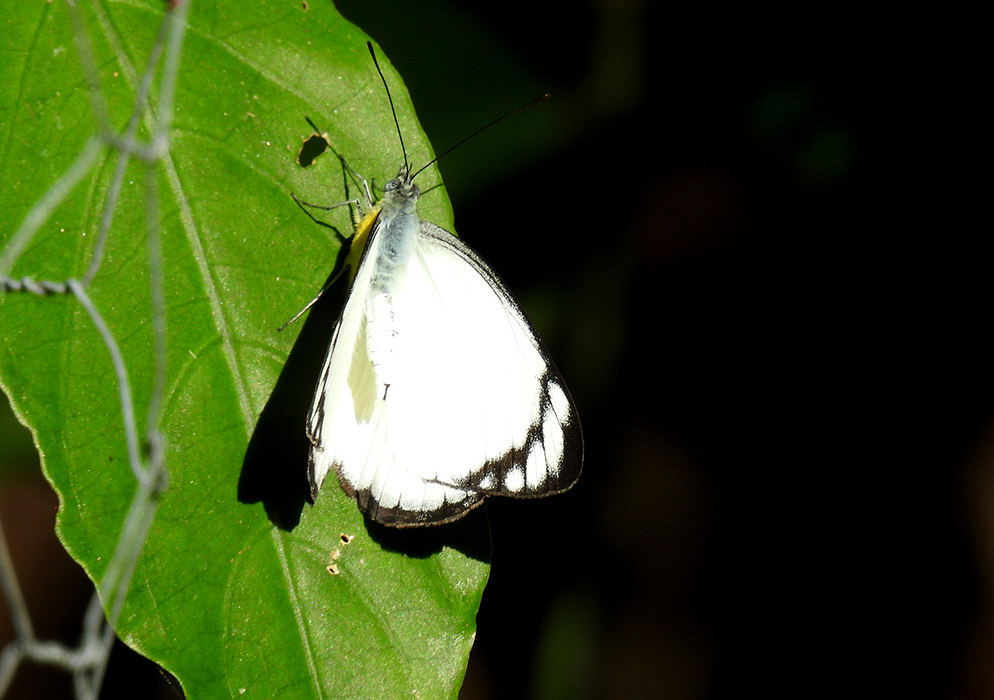
- Upper wings: white with strong black borders and black markings
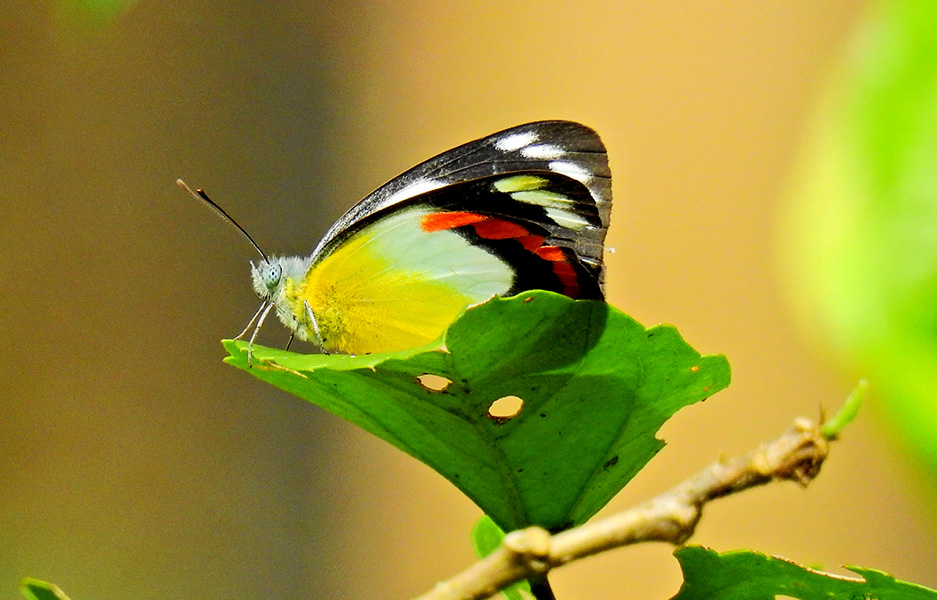
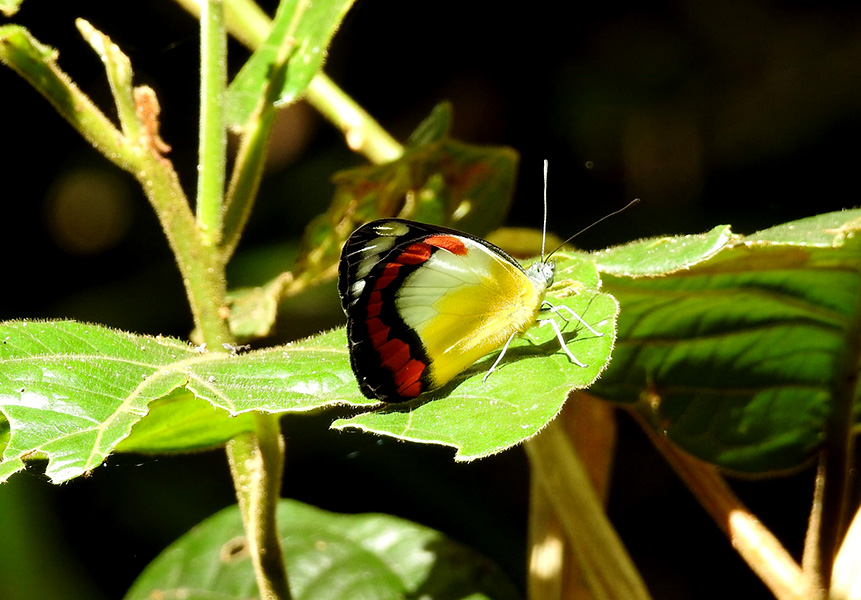
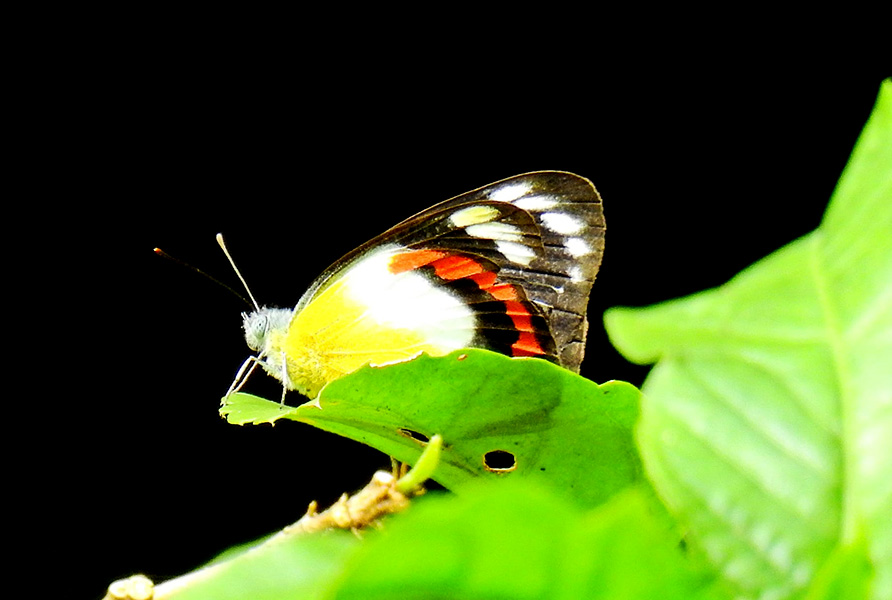
- Underside: vivid red, yellow, black, and white patterns
- Body: slender, dark, and lightly marked
- Flight style: fluttering and graceful, often in the upper layers of forest or along clearings
When the wings are open, the butterfly looks mostly white and black. When it closes its wings, the hidden underside reveals the bright red pattern that gives the species much of its charm.
Habitat and Distribution
The Union Jack Butterfly is found mainly in northern Australia, particularly in tropical and subtropical regions.
It occurs in habitats such as:
- tropical rainforest
- forest edges
- monsoon woodland
- coastal vegetation
- gardens near rainforest areas
Outside Australia, it is also found in New Guinea and nearby island regions.
Because it depends on native host plants, it is usually associated with healthy forested habitats.
Feeding Habits
Adult Union Jack Butterflies feed mainly on flower nectar.
They are often seen visiting:
- rainforest blossoms
- native shrubs
- flowering vines
- garden plants near tropical bushland
Their flight is usually gentle and drifting, allowing them to move between flowers in the tree canopy or along sunny clearings.
Breeding and Host Plants
The Union Jack Butterfly has a close relationship with mistletoe plants, which are the food source for its caterpillars.
Host plants
The caterpillars feed mainly on mistletoes growing on native trees, especially species in the Loranthaceae family.
Life cycle
- Egg – laid on mistletoe leaves
- Caterpillar – feeds on the host plant and grows quickly
- Pupa – suspended on vegetation in a protective chrysalis
- Adult butterfly – emerges to feed, mate, and continue the cycle
The caterpillars absorb compounds from their host plants that make them unpalatable to predators. This chemical defence is reflected in the butterfly’s bright warning colours.
Longevity
The full life cycle from egg to adult usually takes around four to six weeks, depending on temperature and food availability.
Adult butterflies generally live two to three weeks, during which they focus on feeding, mating, and laying eggs.
Interesting Facts About the Union Jack Butterfly
- Its common name comes from the bold pattern on the wings that resembles the Union Jack flag.
- The bright red underside is hidden when the wings are open, making the butterfly appear very different depending on how it rests.
- It is closely tied to mistletoe plants, which are important native parasites in forest ecosystems.
- It is one of the most visually distinctive butterflies in northern Australia.
There is something especially striking about spotting one in the forest — it feels as though a tiny flag has drifted through the trees.
Indigenous Connections
Butterflies and the plants they depend on are part of the broader seasonal and ecological rhythms observed by First Nations peoples across Australia. The Union Jack Butterfly’s connection to mistletoe and native trees links it to forest health and the balance of Country.
In traditional ecological knowledge, butterflies can signal flowering seasons, healthy vegetation, and the changing condition of the landscape. Because Australia has many Indigenous language groups, traditional names for butterflies vary across regions and are not always widely recorded in public sources.
Recognising butterflies like the Union Jack as part of these living systems helps honour the deep understanding of forests and seasonal change held by Traditional Owners.
Conservation Status and Threats
The Union Jack Butterfly is generally considered common and not threatened across much of its range.
However, local populations may still be affected by:
- clearing of native forest
- loss of host trees and mistletoe
- habitat fragmentation
- pesticide use
Because the caterpillars rely so closely on mistletoe, any change to forest structure can affect breeding success.
What Can We Do to Help the Species?
You can help Union Jack Butterflies by:
Protecting native trees and mistletoe
These are essential for caterpillar survival.Reducing pesticide use
Chemical sprays can damage both host plants and butterflies.Planting nectar-rich native flowers
Adults need food while they are active.Supporting rainforest and woodland conservation
Healthy forests support the full life cycle of the species.
Why the Union Jack Butterfly Matters
The Union Jack Butterfly is one of the most beautiful examples of Australia’s tropical butterfly life. Its bold colours, forest habitat, and close relationship with mistletoe make it a fascinating and important part of the ecosystem.
By protecting native trees and supporting healthy forests, we help ensure that this colourful butterfly continues to brighten Australia’s northern landscapes.
Scientific References
- Braby, M. F. Butterflies of Australia: Their Identification, Biology and Distribution
- Atlas of Living Australia – Delias mysis records
- Australian Butterfly Conservation resources
- Australian Museum – butterfly species information
- Wikipedia – Delias mysis (Union Jack Butterfly)
Photo Gallery