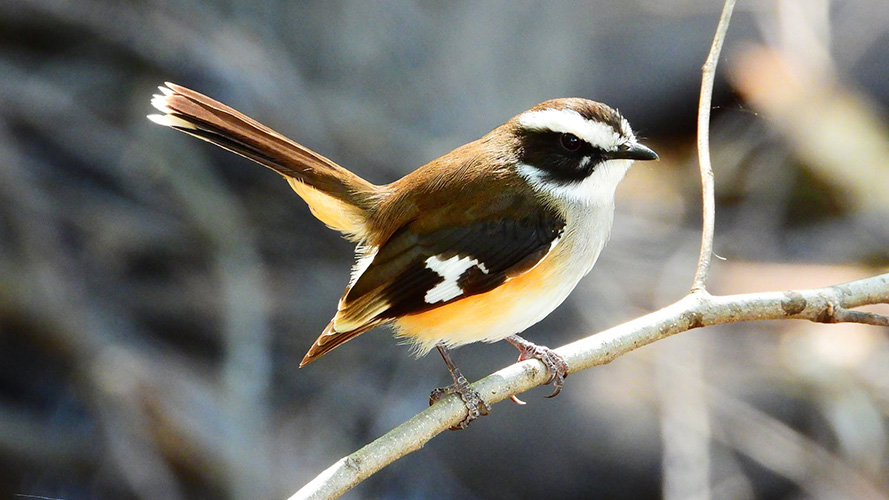
WHITE-BROWED ROBIN
White-browed Robin
The White-browed Robin is a quietly beautiful Australian bush bird, recognised by the bold white stripe above its eye and its calm, upright posture. Often seen perched on a low branch, stump or fallen log, it watches the ground carefully before dropping down to catch insects among leaf litter and low vegetation. Although it is not as brightly coloured as some other birds, its gentle appearance, soft musical calls and graceful hunting style make it a favourite for birdwatchers and nature lovers.
Found across parts of northern and eastern mainland Australia, the White-browed Robin lives in woodland, open forest and scrub where there is enough undergrowth, fallen timber and ground cover to provide shelter and feeding opportunities. Like many small bush birds, it depends on healthy native habitat and can be affected when understorey is removed or the landscape becomes too open. Learning more about this species helps highlight the importance of protecting the rich, layered habitats that support Australia’s native wildlife.
What Does the White-browed Robin Look Like
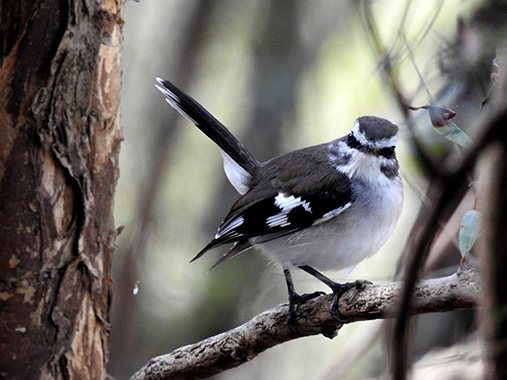
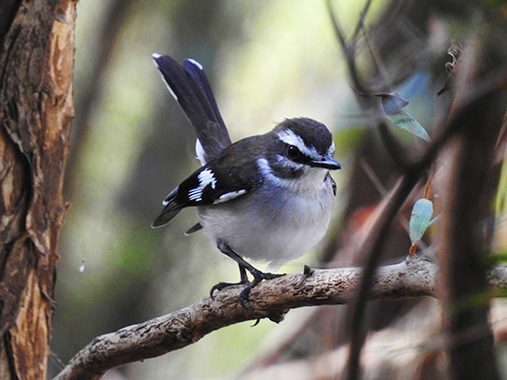
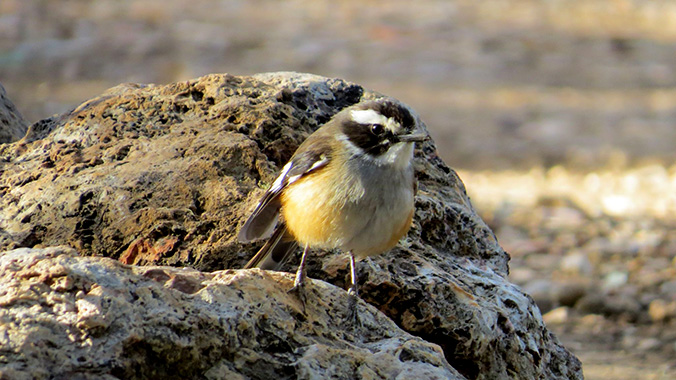
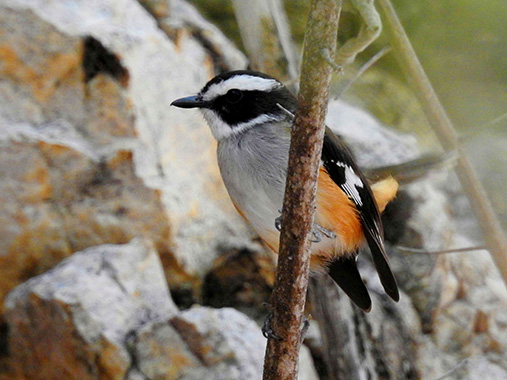
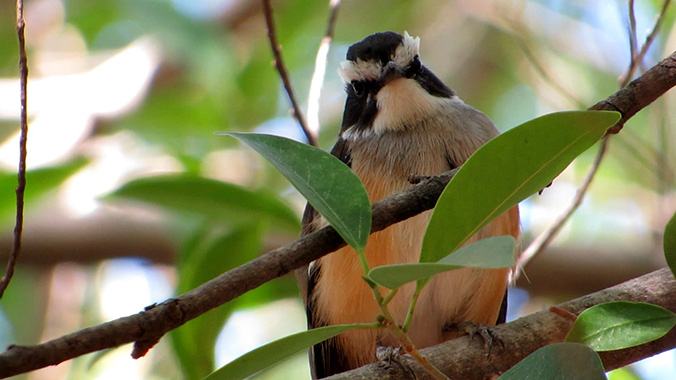
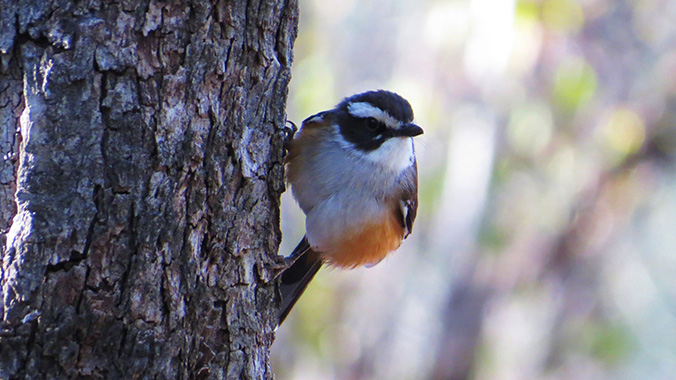
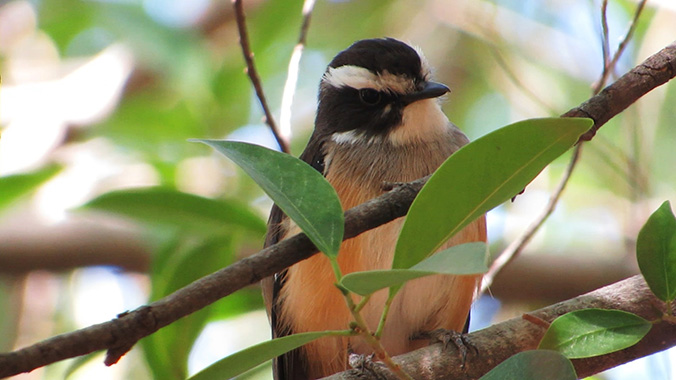
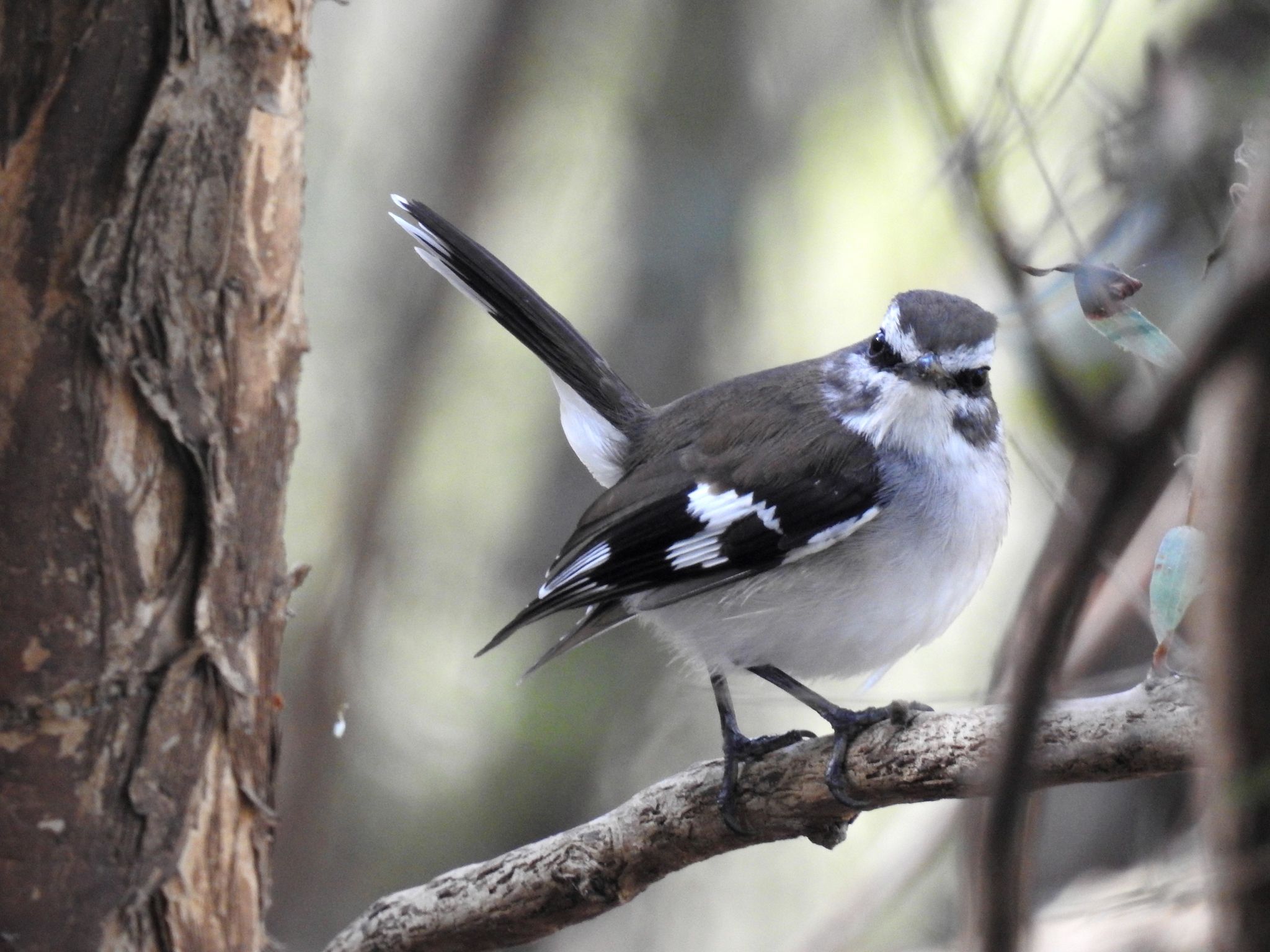
The White-browed Robin is a small Australian robin measuring about 15 to 17 centimetres in length. Its most noticeable feature is the bright white eyebrow, or supercilium, which gives the bird its common name and stands out clearly against the darker head. The upperparts are generally grey-brown to grey, while the underparts are paler and often washed with warm buff or cinnamon tones, depending on sex, age and location.
This robin has a slim, pointed bill suited to catching insects, dark eyes and relatively long legs for a small bird. It often sits upright and still, giving it an alert but gentle appearance. Male and female White-browed Robins are broadly similar, although the female is usually duller and browner than the male.
What Does the White-browed Robin Sound Like
The White-browed Robin has a soft, pleasant voice rather than a loud or harsh call. Its song is made up of clear, musical whistles and sweet phrases that can drift through woodland in the early morning or during the breeding season. It also gives quieter contact calls and sharper alarm notes when disturbed.
Because it is often more reserved than some other bush birds, the White-browed Robin is sometimes heard before it is seen. Its song adds a gentle, melodic presence to forest edges, shrubby gullies and open woodland.
White-browed Robin Habitat and Distribution
The White-browed Robin occurs across parts of northern and eastern mainland Australia. It is found in a variety of native habitats, especially where there is low cover and a healthy layer of leaf litter for feeding. It is most often associated with woodland, open forest, scrub and shrubby country, including sheltered gullies and lightly wooded areas.
This species favours habitats with dense understorey, fallen branches, grasses, small shrubs and native ground cover. It is less likely to persist in places where vegetation has been heavily cleared, overgrazed or simplified, because it relies on lower layers of habitat for shelter, nesting and hunting.
What Does the White-browed Robin Eat
The White-browed Robin feeds mainly on insects and other small invertebrates. Its diet includes beetles, ants, spiders, larvae and a range of tiny animals found on or near the ground. It usually hunts from a low perch, watching carefully before dropping to the ground to seize prey.
This feeding style is often described as perch-and-pounce hunting. The bird may also take food from fallen timber, bark, low branches and leaf litter. By feeding on insects, the White-browed Robin plays a useful role in the natural balance of woodland ecosystems.
White-browed Robin Behaviour
White-browed Robins are usually seen alone, in pairs or in small family groups. They are generally quiet, watchful birds that move through lower vegetation rather than the upper canopy. They often perch at low to mid levels and return to favoured lookout points while feeding.
During the breeding season, pairs become more territorial and vocal. At other times, they remain unobtrusive and can be surprisingly easy to overlook unless they move or call.
White-browed Robin Longevity
The exact lifespan of the White-browed Robin is not well documented in the public sources most commonly available for this species. Like many small Australian songbirds, its survival depends heavily on habitat quality, food availability, weather conditions and predation pressure.
Young birds are especially vulnerable in their first year. Adults that survive the early stages of life may live for several years in suitable habitat, particularly where cover is intact and predation risks are lower.
White-browed Robin Breeding and Nesting
The White-browed Robin usually breeds during the warmer months, although timing can vary depending on rainfall and local conditions. The nest is a small, neat cup made from fine bark, rootlets, grass and plant fibres, often bound together with spider web. It is usually placed in a fork of a shrub, small tree or sapling, often at a fairly low height.
The female typically lays two to three eggs. Both parents may take part in feeding the chicks once they hatch. As with many small birds, nests and young are vulnerable to predators, harsh weather and human disturbance.
White-browed Robin Conservation Status
The White-browed Robin is currently listed as Least Concern on the IUCN Red List. It is not listed as nationally threatened under Australia’s EPBC Act.
Although the species remains widespread across parts of its range, local populations can decline when habitat is cleared, fragmented or degraded. A species does not need to be formally threatened to benefit from habitat protection and careful land management.
Threats to the White-browed Robin
The main threats to the White-browed Robin are linked to habitat loss and habitat degradation. Clearing of woodland and scrub reduces the dense lower vegetation and leaf litter this species depends on for feeding and nesting. Fragmentation can isolate populations and make birds more vulnerable to predators and environmental stress.
Other threats include altered fire regimes, heavy grazing that removes understorey and ground cover, prolonged drought, and predation by cats. In some areas, repeated disturbance and a loss of native vegetation structure may also reduce breeding success.
How to Help the White-browed Robin
People can help the White-browed Robin by protecting and restoring native woodland, scrub and forest understorey. Retaining leaf litter, fallen timber, shrubs and native grasses is especially important because these features provide feeding habitat and shelter.
Keeping pet cats indoors or in secure outdoor enclosures can reduce predation on robins and other small birds. Planting local native shrubs and avoiding unnecessary clearing of low vegetation can also make a real difference. Supporting habitat restoration, responsible fire management and local conservation projects helps protect the layered bush habitats this species needs.
Interesting Facts About the White-browed Robin
The White-browed Robin belongs to the Australasian robin family, Petroicidae. Although it shares the name robin, it is not closely related to the European Robin.
Its bold white eyebrow is one of the easiest ways to identify it in the field.
This species is often easier to notice by its posture and behaviour than by bright colour. A still, upright bird on a low perch in woodland is often a White-browed Robin scanning the ground for prey.
Although it is currently listed as Least Concern, it still depends on healthy native habitat with dense understorey, fallen timber and ground cover. Protecting these habitats helps ensure the White-browed Robin remains part of Australia’s bush soundscape for generations to come.
Reference Links
BirdLife International
https://datazone.birdlife.org
IUCN Red List
https://www.iucnredlist.org
Atlas of Living Australia
https://www.ala.org.au
eBird
https://ebird.org
Australian Government Species Profile and Threats Database
https://www.environment.gov.au/cgi-bin/sprat/public/sprat.pl
Photo Gallery