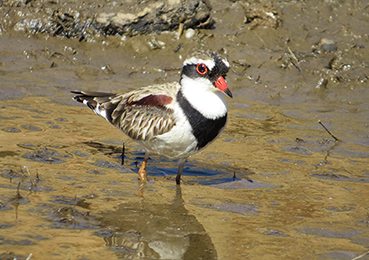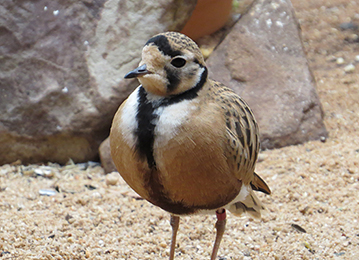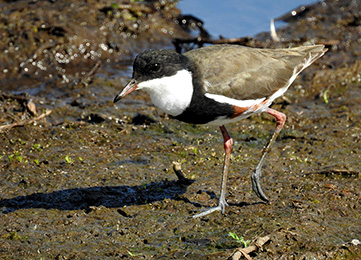
DOTTERELS
Dotterels of Australia
Along Australia’s beaches, mudflats, and coastal plains live a group of small but remarkable birds known as dotterels. These birds belong to the plover family Charadriidae, a group of shorebirds specially adapted for life along the edges of land and water.
Dotterels are known for their compact bodies, quick running movements, and keen eyesight. Unlike some larger shorebirds that probe deeply into mud with long bills, dotterels often hunt by sight, watching carefully before darting forward to capture their prey.
Although they may appear delicate, these birds are incredibly resilient and perfectly adapted to some of Australia’s harshest coastal environments.
Masters of the Shoreline
Dotterels spend much of their time along sandy beaches, tidal flats, and coastal lagoons, where they search for food along the water’s edge.
Their feeding style is energetic and distinctive. Rather than wading slowly like herons or spoonbills, dotterels run quickly across the sand, stopping suddenly to pick up insects or other tiny animals.
Their diet commonly includes:
- insects and insect larvae
- small crustaceans
- marine worms
- molluscs
- other tiny invertebrates found in sand or mud
This constant stop‑start feeding behaviour is a characteristic sight along many Australian shorelines.
Habitat and Distribution
Dotterels can be found in a variety of coastal environments around Australia, including:
- sandy ocean beaches
- estuaries and tidal mudflats
- coastal lagoons and saltmarshes
- offshore islands
- inland salt lakes
Some species remain in Australia year‑round, while others move between regions depending on seasonal conditions and food availability.
Because they rely heavily on open coastal habitats, they are particularly sensitive to disturbance.
Ground‑Nesting Birds
One of the most fascinating aspects of dotterels is how they raise their young.
Unlike many birds that build nests in trees or shrubs, dotterels nest directly on the ground, often on open sand or gravel just above the high‑tide line.
Their nests are usually nothing more than a shallow scrape in the sand containing two or three well‑camouflaged eggs. The eggs blend almost perfectly with the surrounding environment, helping protect them from predators.
Both parents share the responsibility of incubating the eggs and protecting the chicks.
After hatching, the chicks are covered in soft down and are able to move around almost immediately, following their parents while learning to forage.
Longevity
Many dotterel species are surprisingly long‑lived for small birds. Depending on the species and environmental conditions, they can live around 8 to 15 years in the wild, with some banded birds recorded living even longer.
Their survival depends on suitable breeding sites and safe feeding areas along coastlines.
Indigenous Connections
Coastal birds such as dotterels have long been observed as part of the marine and shoreline ecosystems managed by First Nations peoples across Australia.
Their behaviour and seasonal movements often reflect changes in tides, weather patterns, and the availability of coastal food sources. As with many Australian birds, traditional names vary widely among language groups and are not always widely recorded in public sources.
Recognising these birds within the broader coastal ecosystem reflects the deep understanding and stewardship of Country held by Traditional Owners for thousands of years.
Conservation Challenges
Because dotterels nest directly on beaches and open shorelines, they are particularly vulnerable to human disturbance.
Major threats include:
- beach recreation and vehicle traffic
- disturbance by people and dogs
- habitat loss and coastal development
- predation by introduced animals such as foxes and cats
When nesting areas are disturbed, adult birds may abandon their eggs or chicks.
Conservation programs across Australia work to protect important nesting sites through education, fencing, and habitat management.
Why Dotterels Matter
Dotterels are important indicators of the health of Australia’s coastal environments. Their presence reflects productive shorelines rich in small marine life.
Protecting these birds also helps preserve the delicate balance of coastal ecosystems that support many other species.
Watching a dotterel dash across the sand in search of food is a reminder that even the smallest birds play an important role in Australia’s natural world.
Scientific References
BirdLife Australia – Shorebird conservation information
Australian Museum – Dotterel and plover species profiles
Pizzey, G. & Knight, F. The Field Guide to the Birds of Australia
Department of Climate Change, Energy, the Environment and Water – Shorebird conservation
Wikipedia – Dotterels and plovers (Family Charadriidae)