CRAKE BIRDS IN AUSTRALIA
The Hidden Birds of the Wetlands: Australia’s Crakes
Australia’s wetlands are filled with life, yet some of the most fascinating birds living there are rarely seen. Crakes are among the most secretive birds in the country. Small, shy, and superbly camouflaged, they spend most of their lives moving quietly through dense reeds, grasses, and marsh vegetation where they remain hidden from view.
Belonging to the rail family (Rallidae), crakes are close relatives of rails, moorhens, and coots. Unlike many larger wetland birds that feed in open water, crakes prefer the tangled edges of wetlands where they slip between stems and grasses almost like mice.
Masters of Disguise
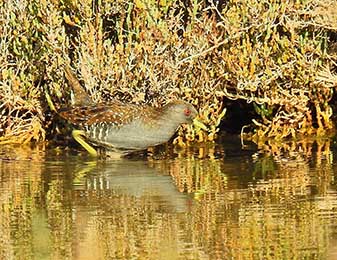
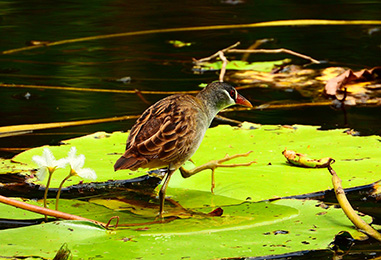
Crakes are generally small birds, often no larger than a sparrow or starling. Their bodies are compact with relatively short wings, long toes, and slender bills. These long toes allow them to walk easily across floating plants and soft mud without sinking.
Most crakes are coloured in subtle shades of brown, grey, and olive, often patterned with spots or stripes. These markings help them blend perfectly with reeds, sedges, and leaf litter. When disturbed, they usually run quickly into cover rather than flying, making them extremely difficult to observe.
Because of this behaviour, many crakes are heard far more often than they are seen. Their calls can include whistles, chirps, or clicking sounds that echo through wetlands at dawn, dusk, or during the night.
Habitat and Distribution
Crakes are closely tied to healthy wetland environments. Across Australia they can be found in habitats such as:
- freshwater marshes
- reedbeds and sedge wetlands
- flooded grasslands
- lake margins and billabongs
- mangrove edges and coastal swamps
They rely on dense vegetation for shelter and protection from predators. When wetlands dry out during droughts, crakes may move to new areas where water and food are available.
Although they are widespread, many species are easily overlooked because of their secretive behaviour.
Feeding Habits
Crakes are opportunistic feeders that search for food along muddy shorelines and among wetland plants. Their diet usually includes:
- aquatic insects and larvae
- worms and small crustaceans
- snails and other invertebrates
- seeds and plant material
They forage by walking slowly through vegetation, picking food from the surface or probing into mud with their bills.
Many species are most active during dawn, dusk, or nighttime, when the wetlands are quieter and predators are less active.
Breeding and Nesting
Crakes typically build their nests in thick vegetation close to water.
Their nests are usually small cups made from grasses, reeds, and plant stems hidden deep in marsh plants. Females lay several speckled eggs, and both parents often take part in incubating them.
When the chicks hatch they are covered in dark down and are able to move around soon after birth. The young birds quickly follow their parents through vegetation while learning how to forage.
Longevity
Because many crake species are difficult to study in the wild, their exact lifespans are not always well documented. However, small wetland rails generally live between 5 and 10 years when habitat conditions are favourable.
Their survival depends heavily on healthy wetlands with stable water levels and abundant food.
Indigenous Connections
Wetlands have always been important landscapes for First Nations peoples across Australia. The birds that live within these environments, including crakes, are closely observed as part of traditional ecological knowledge.
Small wetland birds can indicate seasonal changes, water levels, and the health of marsh ecosystems. Their movements and calls are part of the natural rhythms of Country that have been understood and respected for thousands of years.
Because Australia has hundreds of Indigenous language groups, traditional names for crakes vary across regions and are not always recorded in publicly available sources. Recognising their role in wetland ecosystems reflects the deep cultural knowledge connected to Australia’s waterways.
Conservation and Wetland Protection
While some crake species remain widespread, many depend on fragile wetland habitats that are increasingly under pressure.
Major threats include:
- loss of wetlands through drainage and development
- pollution and declining water quality
- disturbance from human activity
- introduced predators such as cats and foxes
Protecting wetlands is essential for the survival of crakes and the many other animals that depend on these habitats.
Why Crakes Matter
Crakes may be small and secretive, but they play an important role in wetland ecosystems. By feeding on insects and other small animals they help maintain ecological balance within marsh environments.
Their presence is often a sign of a healthy wetland rich in plant life and invertebrates. Though seldom seen, crakes are an important and fascinating part of Australia’s natural heritage.
Scientific References
- BirdLife Australia – Rails and Crakes of Australia
- Australian Museum – Rail and Crake family information
- Pizzey, G. & Knight, F. The Field Guide to the Birds of Australia
- Department of Climate Change, Energy, the Environment and Water – Wetland bird conservation
- Wikipedia – Rail family (Rallidae) overview