
AUSTRALIAN WHITE IBIS
Australian White Ibis
At the edge of a wetland, an Australian white ibis steps quietly through the shallows. Its white feathers catch the morning light as it lowers its long, curved bill into the mud, searching for small animals hidden beneath the surface.
Although many people now recognise this bird from city parks and rubbish bins, the Australian white ibis is a native waterbird with a long connection to Australia’s wetlands and floodplains. Its urban reputation tells only part of its story: this adaptable bird also plays a valuable role in natural ecosystems.
What Does the Australian White Ibis Look Like?
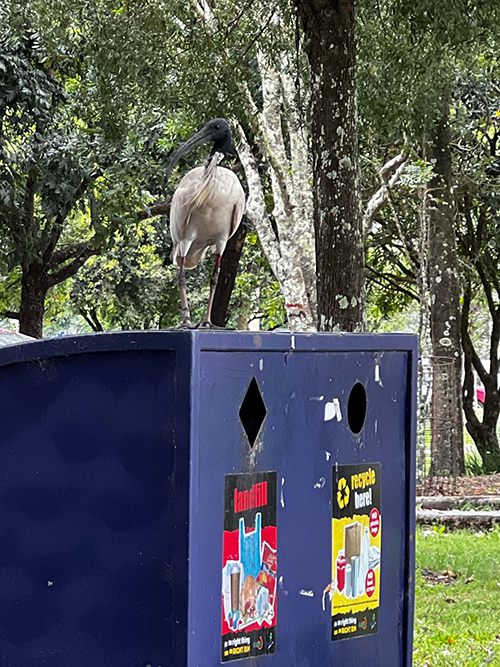
The Australian white ibis is a large wading bird, measuring approximately 65–76 centimetres in length. Adults have predominantly white plumage, a bare black head and upper neck, and a long, downward-curving black bill.
Its dark legs allow it to wade through shallow water, while its sensitive bill helps it find food beneath mud and vegetation. The eyes are dark brown.
Adults have cream-coloured ornamental feathers at the base of the neck and darker, lacy-looking feathers near the tail. During the breeding season, the bare skin beneath the wings becomes a brighter red, sometimes visible when a bird stretches or flies.
Females are generally smaller than males and have shorter bills. Young birds have feathers covering their head and neck, gradually developing the bare-headed appearance of adults as they mature.
What Does the Australian White Ibis Sound Like?
Australian white ibises make rough croaks, grunts and other low, guttural calls, rather than musical songs.
They are often relatively quiet while feeding, but breeding colonies can be noisy. Calls mingle with the rustle of wings and the movement of birds among branches as adults court, defend nest sites and care for their young.
Where Does the Australian White Ibis Live?
Australian white ibises are widespread across much of mainland Australia, particularly in the north and east. They use a variety of habitats, including:
- Freshwater wetlands, swamps and lagoons.
- Floodplains, riversides and lake margins.
- Grasslands and agricultural land.
- Coastal mudflats and estuaries.
- Urban parks, gardens, sports grounds and artificial waterways.
These birds can travel considerable distances as feeding and breeding conditions change. Rainfall and flooding may create rich feeding grounds, while drought can make suitable wetlands harder to find.
In towns and cities, permanent water, nesting trees and accessible food provide alternative resources.
What Does the Australian White Ibis Eat?
Australian white ibises eat insects, earthworms, crustaceans, molluscs and other small animals, including some frogs and fish.
They search for food by probing soft ground and shallow water with their sensitive bills. This allows them to detect prey they cannot see.
Crayfish and mussels are favoured foods. An ibis may strike a mussel against a hard surface to break open its shell and reach the animal inside. On farmland, ibises also eat insects such as locusts, helping reduce numbers of potential crop pests.
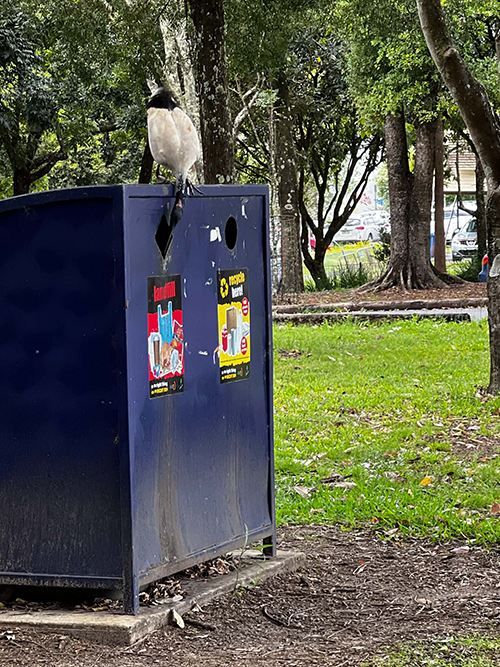
In urban areas, they take discarded food from picnic grounds, rubbish bins and landfill sites. Their ability to use different food sources helps them survive in changing environments, but human food scraps are not a substitute for a natural diet.
How Long Does an Australian White Ibis Live?
Australian white ibises can live for more than 20 years, with longevity records indicating that some individuals reach approximately 28 years.
This is a potential lifespan, not an average. Survival varies with food availability, habitat conditions, disease, accidents and other pressures.
Breeding and Raising Young
Australian white ibises usually breed in colonies, sometimes alongside other waterbirds. They build nests in trees and shrubs, often over or near water, or among dense wetland vegetation.
Breeding timing varies across Australia and is influenced by local conditions, including rainfall and food availability.
During courtship, a male may bow towards a female and offer her a twig. If she accepts, the pair may preen each other before establishing their nest.
The nest is a broad, often untidy platform made from sticks, reeds and other plant material. Females commonly lay two or three eggs, although larger clutches occur.
Both parents share incubation, which lasts approximately three weeks, and both feed the chicks. The young are fed regurgitated food and usually begin flying at around six weeks of age.
Why Are Australian White Ibises Found in Cities?
Urban environments offer reliable food and water, but the movement of ibises into cities also needs to be understood in the context of changes to their natural habitat.
Wetland degradation, drought and altered river flows have reduced feeding and breeding opportunities in parts of inland Australia. Cities can provide alternative places to gather, roost and nest.
Their habit of searching rubbish bins has earned them nicknames such as “bin chicken”, “tip turkey” and “dumpster diver”. While familiar, these names can obscure their identity as native waterbirds.
Is the Australian White Ibis a Sacred Ibis?
The Australian white ibis was formerly known in Australia as the “sacred ibis”. However, it is a separate species from the African sacred ibis, Threskiornis aethiopicus.
Despite a persistent misconception, the Australian white ibis is native to Australia, not an introduced African bird.
Australian White Ibis Conservation Status
The Australian white ibis is classified globally as Least Concern on the IUCN Red List.
However, this broad classification does not mean that all populations are secure. Declines in parts of its natural wetland range highlight the importance of protecting suitable habitat and maintaining healthy river systems.
Threats to Australian White Ibises
Threats and pressures include:
- Wetland loss and degradation, reducing feeding, nesting and roosting habitat.
- Altered water flows, including water extraction and river regulation that change natural flooding patterns.
- Drought, which can reduce food supplies and breeding opportunities.
- Pollution and litter, including fishing line that can entangle birds.
- Conflict with people, particularly around large urban nesting colonies.
Protecting wetlands benefits not only ibises but also the many other birds, fish, frogs and invertebrates that depend on them.
How Can We Help Australian White Ibises?
- Support wetland conservation. Protecting waterways, floodplains and native vegetation helps maintain natural feeding and breeding areas.
- Keep rubbish secure. Close bin lids and dispose of food waste responsibly.
- Avoid deliberately feeding ibises. Allow them to find their own food rather than encouraging dependence on scraps.
- Remove litter safely. Fishing line, hooks and plastic can injure wildlife.
- Give nesting birds space. Observe colonies from a distance and keep pets away.
- Seek advice about injured birds. Contact a local wildlife rescue organisation or veterinarian rather than attempting to catch a large bird without guidance.
Interesting Facts About Australian White Ibises
- They find hidden food by touch. Their sensitive bills help them locate prey beneath mud and water.
- They can break open mussels. A hard surface helps them access the food inside the shell.
- They sometimes fly in V-shaped formations. Look overhead for their white bodies, outstretched necks and trailing legs.
- Both parents care for their chicks. Incubation and feeding are shared responsibilities.
- Australia has three ibis species. The Australian white ibis shares the continent with the Straw-necked ibis and Glossy ibis.
The next time an Australian white ibis walks across a park, imagine it stepping through a sunlit wetland, its bill searching beneath the water. Looking beyond its urban nickname helps us appreciate a resourceful native bird—and the habitats it still needs.
References and Further Reading
Photo Gallery


