Australia’s Aerial Acrobats: Dragonflies & Damselflies
If you’ve ever sat by an Australian creek, pond, or even a backyard swimming pool on a sunny day, you’ve likely been mesmerised by the sight of a dragonfly zipping past. With their shimmering wings, huge eyes, and incredible speed, they are some of the most spectacular insects on our continent.
These aren’t just pretty bugs; they are highly-tuned predators that have been perfecting their craft for over 300 million years. They were flying before the dinosaurs walked the Earth!
Masters of the Sky
Dragonflies and damselflies belong to an order of insects known as Odonata, which fittingly translates to “toothed ones.” While they don’t bite humans, their mouths are fearsome weapons for catching other flying insects mid-air.
Their real superpower, however, is flight. They can hover like helicopters, fly backwards, zip straight up or down, and reach speeds that would make other insects dizzy. They are the undisputed top guns of the insect world.
Two Sides of the Same Coin: What’s the Difference?
They are close cousins, but here’s the easiest way to tell them apart when you spot one resting on a reed:
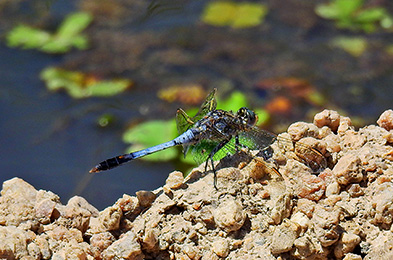
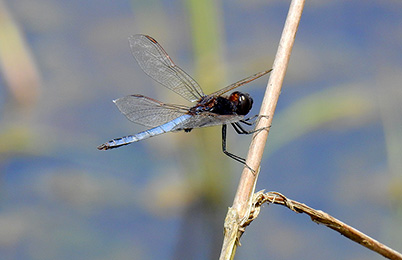
- Dragonflies: These are the robust, powerful flyers. When they land, they hold their four wings straight out to the side, like the wings of an aeroplane. Their eyes are enormous and usually touch in the middle of their head, giving them incredible wrap-around vision.
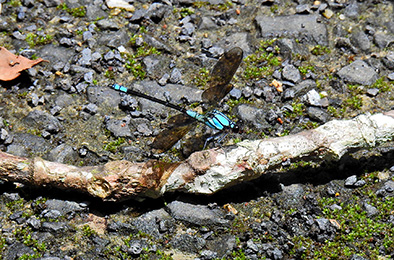
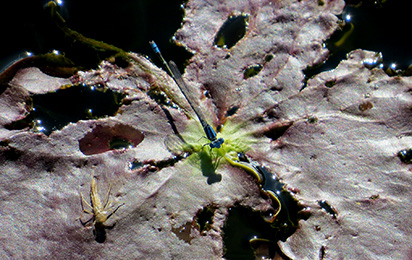
- Damselflies: These are typically more slender and delicate-looking. When they land, they fold their wings back neatly along their body (or slightly above it). Their eyes are separated, sitting on either side of a wider head, almost like a hammerhead shark.
A Life Linked to Water
While we admire them in the air, the life story of every dragonfly and damselfly is tied to the water. They spend the first part of their lives underwater as nymphs—fierce aquatic predators that look nothing like their adult selves.
A healthy population of these shimmering flyers is often a great sign of a healthy waterway.
Exploring by Colour (A Tricky Business!)
To help you identify that flash of colour you saw by the water, we have organised this section by their most obvious colours—the brilliant blues, fiery reds, and striking yellows.
But nature isn’t always neat and tidy!
Dragonflies are notorious for changing their outfits. In many species, the mature males are the bright, flashy ones you notice first. The females are often more camouflaged in browns, greens, or yellows. Furthermore, some species actually change colour as they get older, sometimes developing a dusty, whitish coating that hides their original colour entirely.
So, if you saw a bright blue beauty, head to the “Blue Dragonflies” section below to start your search, but remember to check the description to see what the female looks like too!