Jezebel Butterflies of Australia
Jezebel Butterflies of Australia
Among the most colourful butterflies found in Australian forests and woodlands are the Jezebel butterflies, a group of striking insects belonging to the genus Delias in the butterfly family Pieridae. These butterflies are well known for their brilliant patterns of white, yellow, red, and black, making them some of the most eye‑catching species in the Australian landscape.
Jezebel butterflies are often seen drifting gracefully high in the treetops or gliding slowly through woodland clearings and gardens. Their vivid colours and elegant flight make them a favourite among birdwatchers, butterfly enthusiasts, and nature photographers.
Distinctive Colours and Patterns
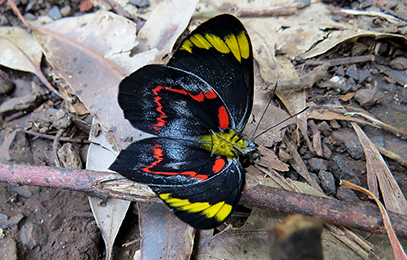
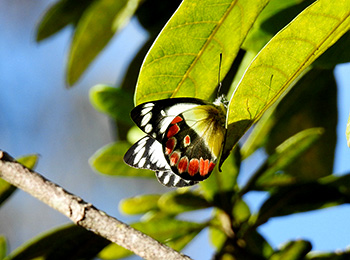
One of the defining features of Jezebel butterflies is the dramatic contrast between the upper and underside of their wings.
- Upper wings: usually white or pale yellow with bold black borders and markings.
- Underside: bright combinations of red, yellow, and black arranged in intricate patterns.
These colours are not only beautiful but also serve as a warning to predators. Many Jezebel butterflies contain toxins obtained from the plants they feed on as caterpillars, making them unpalatable to birds and other predators.
Life in the Treetops
Unlike many butterflies that stay close to the ground, Jezebel butterflies spend much of their time flying in the canopy of trees. They glide from branch to branch searching for flowers and host plants.
Because of this behaviour, they are often easier to spot in flight than when resting.
Their slow, floating flight allows them to travel easily between flowering trees and woodland habitats.
A Special Relationship with Mistletoe
The life cycle of Jezebel butterflies is closely connected to mistletoe plants, which grow on the branches of trees.
Female butterflies lay their eggs on mistletoe leaves, and the caterpillars feed on these plants as they grow. Mistletoe contains natural chemical compounds that the caterpillars absorb, making both the larvae and adult butterflies toxic to predators.
This relationship means Jezebel butterflies are commonly found in areas where mistletoe grows naturally, including woodlands, forests, and even suburban parks.
Jezebel Species in Australia
In Australia there are only two regularly recognised Jezebel butterfly species.
- Common Jezebel (Delias nigrina)
- Scarlet Jezebel (Delias argenthona)
Each species has its own distinctive colour patterns, habitats, and distribution.
Longevity and Life Cycle
Like all butterflies, Jezebels undergo complete metamorphosis, passing through four stages:
- Egg – laid in clusters on mistletoe leaves
- Caterpillar – feeds on mistletoe foliage
- Chrysalis – suspended from leaves or branches
- Adult butterfly
The entire life cycle usually takes four to six weeks, depending on weather conditions.
Adult butterflies typically live two to three weeks, spending that time feeding, mating, and laying eggs for the next generation.
Indigenous Connections
Butterflies have long been observed within the seasonal rhythms of Australian ecosystems by First Nations peoples. Their appearance often coincides with flowering plants and the growth cycles of vegetation.
Jezebel butterflies, which rely on mistletoe plants growing in woodland trees, are part of the broader ecological relationships between plants, insects, and animals that have been recognised in traditional ecological knowledge for thousands of years.
Because Australia contains many Indigenous language groups, traditional names for these butterflies vary across regions and are not always widely documented in publicly available sources.
Why Jezebel Butterflies Matter
Jezebel butterflies are not only beautiful but also ecologically important. They help pollinate flowering plants and form part of the complex web of life within forests and woodlands.
Their presence often reflects healthy ecosystems where host plants and flowering trees are thriving.
In this section you can explore the individual Jezebel butterfly species found in Australia and learn more about their appearance, behaviour, and conservation.
Scientific References
Braby, M. F. Butterflies of Australia: Their Identification, Biology and Distribution
Atlas of Living Australia – Delias species records
Australian Butterfly Conservation resources
CSIRO – Australian insect biodiversity
Wikipedia – Delias (Jezebel butterflies)