NORTHERN LONG-NECKED TURTLE
Northern Long‑necked Turtle
The Northern long‑necked turtle is one of northern Australia’s most characteristic freshwater turtles – a long‑necked, strongly predatory species shaped by monsoon rains, floods and drying billabongs.
1. Quick facts
| Feature | Details |
|---|---|
| Common name | Northern long‑necked turtle |
| Scientific name | Chelodina rugosa |
| Subgenus (often) | Chelodina (Chelydera) |
| Family | Chelidae (side‑necked turtles) |
| Distribution | Northern Australia, New Guinea |
| Habitat | Billabongs, floodplain wetlands, slow rivers, lagoons |
| Lifestyle | Aquatic ambush predator, seasonal wet–dry cycles |
2. Appearance
Shell (carapace)
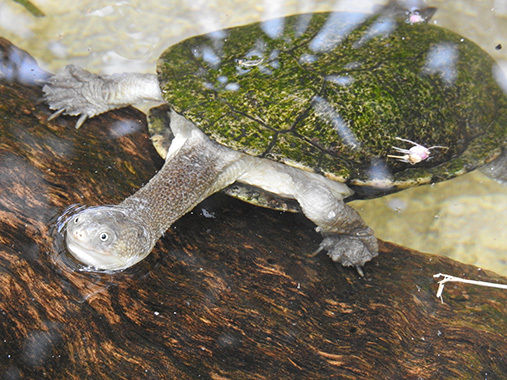
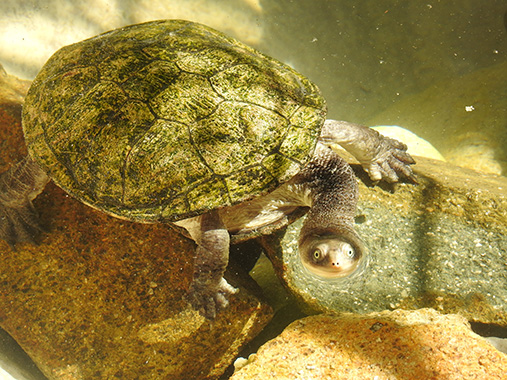
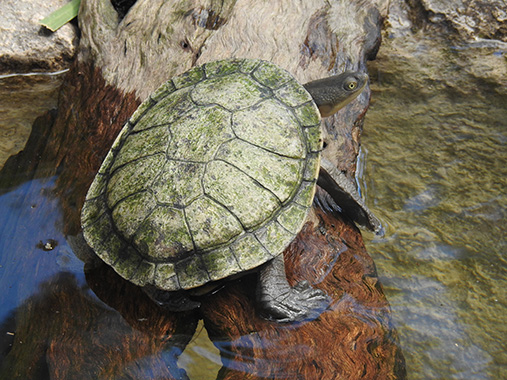
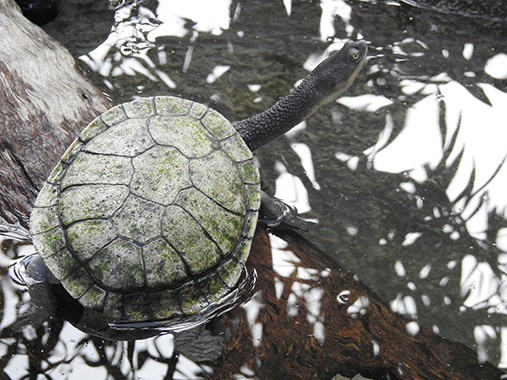
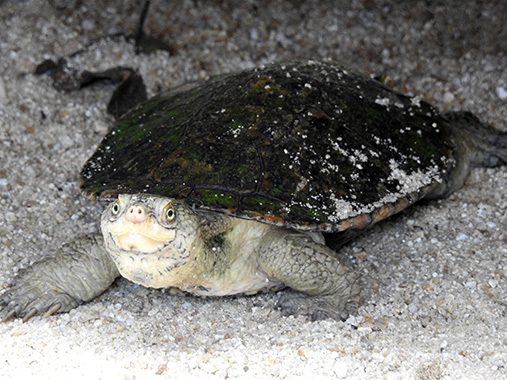
- Shape: Oval, moderately domed, often a bit rugged in older animals.
- Colour: Brown to dark olive, often darker when wet.
- Size:
- Adults typically around 20–28 cm shell length, some larger individuals approaching or exceeding 30 cm.
Plastron (underside)
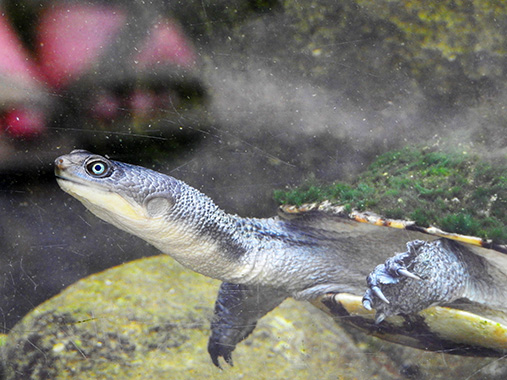
- Colour: Pale cream to yellowish, sometimes with darker smudges.
- Texture: Hard, protective, with scutes (plates) clearly outlined.
Neck, head and skin
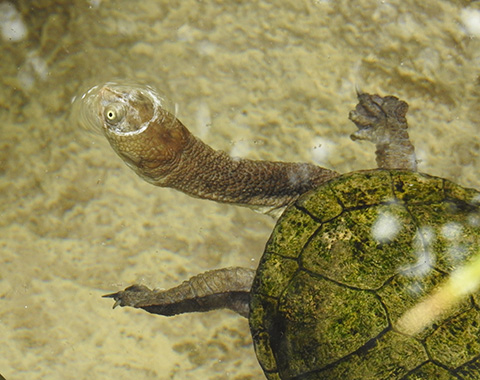
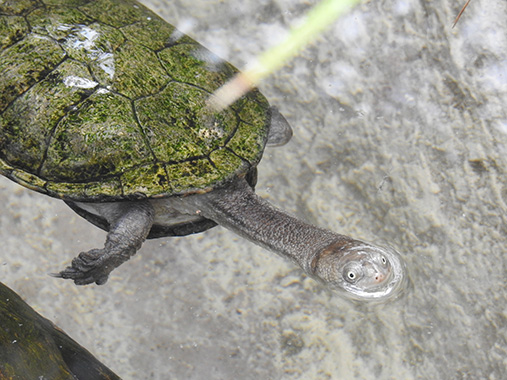
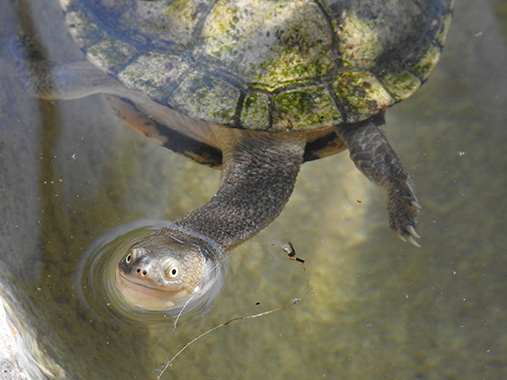
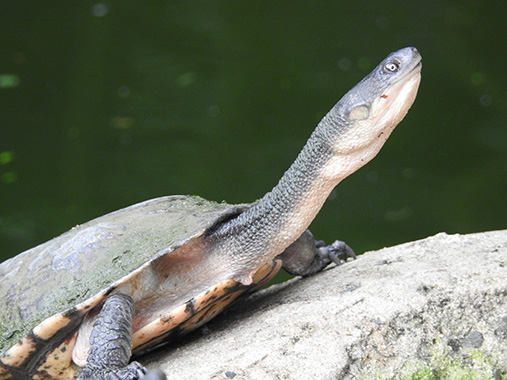
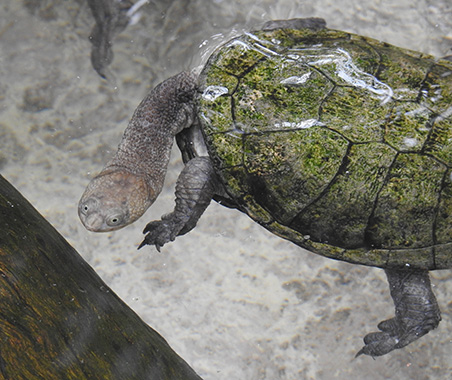
- Neck: Extremely long – often as long as or longer than the shell.
- Head: Comparatively large and strong for a long‑neck, characteristic of the
Chelydera‑type turtles:- Streamlined but robust
- Powerful jaws for gripping prey
- Colour: Darker on top, paler below; can be mottled or speckled.
- Skin: Slightly wrinkled, with a finely pebbled texture; sometimes small barbels on the chin.
When it relaxes, the neck folds sideways under the front edge of the shell, typical of side‑necked turtles.
3. Distribution and habitat
Where it lives
The Northern long‑necked turtle is a tropical species:
- Across northern Australia, including:
- Parts of Western Australia (Kimberley region)
- Northern Territory (Top End, Arnhem Land, Kakadu and surrounding wetlands)
- Northern Queensland (Gulf Country and some Cape York areas)
- Also found in New Guinea and nearby regions.
Preferred habitats
It is strongly associated with:
- Billabongs and floodplain wetlands
- Backwaters and side‑channels of rivers
- Seasonal swamps and lagoons
- Slow‑flowing creeks
These environments are shaped by the monsoonal wet–dry cycle:
- Wet season: Heavy rain, rivers flood, floodplains spread into vast shallow wetlands full of fish and invertebrates.
- Dry season: Many of these wetlands shrink or dry out completely.
The Northern long‑necked turtle is very well adapted to this boom‑and‑bust pattern.
4. Behaviour and adaptations
Ambush predator
Like other Chelodina, the Northern long‑necked turtle is a sit‑and‑strike hunter:
- It hides among submerged plants or on the muddy bottom.
- A fish, tadpole or shrimp comes within range.
- The turtle’s neck shoots out with remarkable speed.
- It creates a suction effect, gulping water and prey in one rapid movement.
Diet includes:
- Small fish
- Tadpoles and frogs
- Aquatic insects and larvae
- Crustaceans (such as small prawns and yabbies)
- Occasionally carrion and other small aquatic animals
Its strong head and jaws (a feature linked to its placement in Chelodina (Chelydera)) are well suited to holding onto wriggling prey.
Coping with the dry season
In many parts of its range, water is not permanent. The turtle uses several strategies:
- Seeking refuge in the deepest remaining pools as wetlands shrink.
- In some areas, they can:
- Bury into mud in drying waterholes.
- Reduce activity and wait out harsh conditions until water returns.
This seasonal rhythm strongly influences their growth, feeding and breeding.
Daily rhythms
- Often most active in warmer parts of the day, especially in the wet season when there is plenty of prey.
- May bask at the surface or on logs and banks, though in croc‑country they can be quite wary and spend more time just below the surface, with only the nostrils exposed.
5. Reproduction and life cycle
The Northern long‑necked turtle’s breeding cycle is closely tied to the wet–dry tropical pattern.
Nesting behaviour
A fascinating pattern seen in this species (and closely related forms) is sometimes called “delayed hatching” or “environmentally cued hatching”:
- Females may lay eggs in the dry season, in nests dug into the banks or floodplain soils near future wet areas.
- The eggs can sit through dry conditions in the ground.
- When the wet season arrives and soils are saturated or flooded, conditions trigger the final stage of development and hatching.
- Hatchlings then emerge into a landscape full of fresh water and food.
This strategy helps align the most vulnerable life stage—the tiny hatchling—with the best possible conditions.
Eggs and hatchlings
Eggs:
- Hard‑shelled, white, elongated oval.
- Clutch size varies but is often around 8–20 eggs (figures can vary by locality and female size).
Hatchlings:
- Very small; shell length only a few centimetres.
- Dark, often with a proportionally large head and neck.
- They instinctively move towards water, guided by moisture, slope and visual cues.
Survival rates are low due to predators, but those that do survive can live for decades.
6. Ecological role
The Northern long‑necked turtle plays an important role as a mid‑level predator in tropical freshwater systems:
- Helps control:
- Small fish
- Tadpoles and frogs
- Aquatic invertebrates
- Contributes to nutrient cycling by feeding on carrion and organic matter.
- Serves as prey for:
- Large fish
- Waterbirds
- Estuarine and freshwater crocodiles
- Monitors (goannas), particularly at nesting sites
Its presence, especially in numbers, is a good sign of a functioning wetland system.
7. Threats and conservation
Main threats
Although still widespread in many areas, the Northern long‑necked turtle faces pressures:
Habitat change and degradation
- Draining of billabongs and swamps
- Changes to natural flood regimes due to dams or water extraction
- Pollution and sedimentation of wetlands
Predators at nests
- Eggs and hatchlings can be taken by:
- Monitor lizards
- Birds
- Introduced animals such as pigs and dogs in some areas
- Eggs and hatchlings can be taken by:
Roads and vehicles
- When turtles move between wetlands, especially after rain, they risk being run over.
Climate change
- Changes to rainfall patterns and timing of monsoons may affect the delicate link between nesting, incubation and the arrival of water.
Conservation status
- In much of northern Australia, Long-necked turtles are still considered relatively common locally where habitat remains intact.
- However, because their life cycle is tightly tied to natural flooding patterns, they can be vulnerable if water regimes are heavily altered.
Local and regional assessments may differ, so management agencies often monitor them as indicators of wetland health.
Picture a receding billabong at the end of the dry season. The air is dusty and warm, and the last pool of water is only waist‑deep in the middle. Fish circle nervously in the murky green.
Half‑buried in the soft mud at the edge, a Northern long‑necked turtle waits. Its shell is stained with algae, its long neck folded like a coiled rope beneath the rim. Only its nostrils and eyes break the surface.
A small fish darts closer, drawn to an eddy of clearer water. The turtle seems not to move. Then, in a blur, the neck straightens, the jaws open, and water and fish disappear in a single gulping rush. A few bubbles rise, and the water closes again.
Far away, dark clouds build on the horizon. When the monsoon finally arrives, this small, shrinking pool will expand into a broad, flooded plain. Turtles will move out across it, feeding, breeding and burying their eggs in the steaming soil, ready for the next cycle of wet and dry.
Photo Gallery